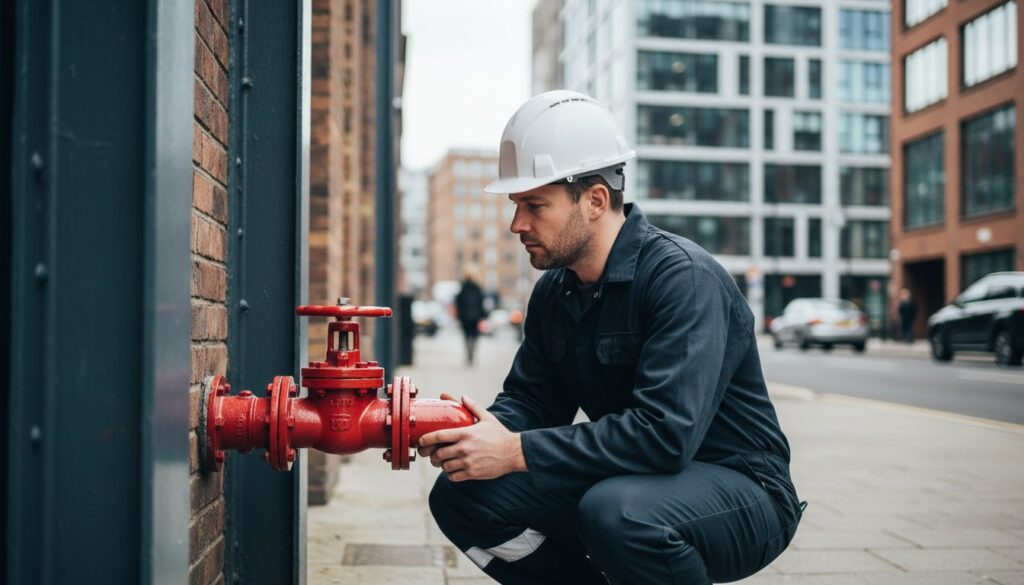
What if the fire safety system you’re relying on hasn’t been tested in months and could fail when lives depend on it most?
Key Takeaways
- Discover the critical role of dry riser systems in fire safety and how they provide essential water supply access for emergency services in high-rise buildings.
- Learn the specific building height requirements and regulations that determine when dry riser installation becomes mandatory in Sheffield and surrounding areas.
- Understand the essential maintenance schedules and inspection procedures required to ensure your fire safety systems remain compliant and fully operational.
- Gain insight into local fire safety regulations and how proper dry riser compliance protects your property and meets legal obligations.
- Explore professional dry riser services available in Sheffield, Rotherham, Doncaster, Worksop, and Retford to maintain optimal fire safety standards.
What is a Dry Riser and Why is it Important?
A dry riser is a specialised vertical firefighting system designed to deliver water rapidly to multiple floors during fire emergencies.
When and Where Are Dry Risers Necessary?
The requirement for dry riser installation isn’t arbitrary.
Maintenance Requirements for Dry Risers
Regular maintenance of dry riser systems is crucial for ensuring their reliability and effectiveness in emergencies. These systems are integral to fire safety protocols, and neglecting their upkeep can lead to dire consequences. A thorough maintenance routine not only complies with legal requirements but also protects lives and property.
Inspection and Testing
Inspections for dry risers should occur at least every six months, in accordance with British Standard BS9990. This standard outlines the necessary checks and balances to ensure the system functions correctly. A comprehensive checklist for dry riser maintenance includes:
- Visual inspection of all components, including valves and pipework.
- Testing the operational pressure of the system.
- Ensuring that all access points are unobstructed and clearly marked.
- Checking for any signs of corrosion or physical damage.
Maintaining proper documentation and certification for each inspection is essential. This not only provides proof of compliance but also establishes a maintenance history that can be invaluable during audits or emergency situations.
Troubleshooting Common Problems
Recognising the signs of malfunction in a dry riser is vital. Common indicators include:
- Inconsistent water pressure when testing.
- Visible leaks or water stains around the system.
- Difficulty in operating valves or other components.
If any of these issues arise, immediate action is necessary. First, cease all operations involving the dry riser. Contact a local expert for urgent repairs. In Sheffield, there are several certified service providers who specialise in dry riser maintenance, ensuring that your system is restored to optimal condition promptly.
In summary, regular inspections, thorough testing, and prompt troubleshooting are essential components of maintaining dry risers. These steps not only enhance safety but also ensure compliance with industry standards, giving facility managers peace of mind.
Compliance and Local Regulations
Understanding and adhering to fire safety compliance regulations is crucial for any facility manager or industrial operator in Sheffield. Dry risers play a pivotal role in these regulations, forming an integral aspect of a broader safety strategy designed to protect lives and property in the event of a fire. Local authorities are tasked with enforcing these safety standards, which means that compliance is not merely a recommendation; it is a legal obligation.
Understanding Local Fire Safety Laws
In Sheffield, the Regulatory Reform (Fire Safety) Order 2005 establishes key regulations that impact dry riser installations. This legislation mandates that all commercial premises assess their fire risks and implement appropriate measures to mitigate them, including the installation of dry risers in buildings over 18 metres in height. Local enforcement agencies, such as the South Yorkshire Fire and Rescue Service, are responsible for inspecting compliance and ensuring that facilities meet these standards. Recent changes to fire safety legislation, particularly following the Grenfell Tower fire in 2017, have heightened scrutiny on dry riser installations, resulting in stricter enforcement and additional responsibilities for property owners.
Ensuring Compliance
To maintain compliance, facility managers should adopt best practices such as regular inspections and maintenance of dry risers, ensuring they remain operational at all times. Documenting maintenance activities and keeping detailed records can be invaluable during inspections. Staying updated on local regulations is equally critical; subscribing to updates from the South Yorkshire Fire and Rescue Service or joining local industry forums can provide timely information on legislative changes. Resources such as the Fire Industry Association offer guidance and support for businesses in Sheffield, helping them navigate compliance challenges effectively. Facility managers should also be aware that fire hydrant compliance in Sheffield and Rotherham forms an equally important part of your overall fire safety obligations, as a non-compliant fire hydrant can invalidate your commercial insurance policy and result in failed safety audits.
Failure to adhere to these regulations can result in serious repercussions, including hefty fines and, in severe cases, legal action. A notable case involved a Sheffield high-rise where a lack of operational dry risers led to delays in firefighting efforts, resulting in significant property damage and endangering lives. Such incidents underline the importance of proactive compliance measures and the critical role dry risers play in fire safety.
For businesses in Sheffield, prioritising compliance with fire safety regulations is not just about legal obligation; it’s about ensuring safety and peace of mind. Contact us today for tailored solutions that guarantee your dry riser systems are compliant and ready for action.
AFN Industrial Services: Your Partner for Dry Riser Solutions
AFN Industrial Services delivers comprehensive dry riser maintenance and testing across Sheffield, Rotherham, and the wider Yorkshire region. Our certified technicians understand the critical role these systems play in fire safety compliance, ensuring your building meets all regulatory requirements whilst protecting lives and property.
Operating from our Sheffield base, we’ve built a reputation for reliability amongst local businesses who demand precision in their fire safety systems. Our dry riser services include quarterly testing, annual maintenance, emergency repairs, and complete system installations. Each service follows strict industry protocols, guaranteeing your systems remain operational when needed most.
Why Choose AFN?
Twenty-three years of experience in fire safety compliance sets AFN apart from competitors. We’ve maintained dry riser systems across diverse sectors, from high-rise residential blocks to industrial facilities, understanding the unique challenges each environment presents.
Our bespoke approach means every maintenance schedule aligns with your operational requirements. Rather than rigid service packages, we develop tailored solutions that minimise disruption whilst maximising safety compliance. This flexibility proves essential for businesses operating continuous production schedules or managing tenant expectations.
Round-the-clock availability ensures urgent dry riser issues receive immediate attention. System failures don’t wait for convenient hours, and neither do we. Our emergency response team maintains full certification and equipment readiness, delivering rapid solutions that restore fire safety systems without delay.
Local knowledge provides additional value. We understand Yorkshire’s building regulations, work closely with regional fire services, and maintain relationships with approved suppliers. This network enables faster parts sourcing and smoother coordination during complex installations or repairs.
Get in Touch
Contact AFN Industrial Services directly for comprehensive dry riser consultations and detailed quotes. Our team provides transparent pricing structures and realistic timescales, ensuring you can plan maintenance budgets effectively.
Explore our extensive fire safety resources, including our Fire Risk Assessment Guide for Businesses in Sheffield & Rotherham (2026) and Fire Sprinkler System Guide for Sheffield & Rotherham Businesses (2026). These resources complement our dry riser services, providing complete fire safety solutions for Yorkshire businesses.
Schedule your consultation today. Proactive maintenance prevents costly emergencies and ensures continuous compliance with fire safety regulations.
Securing Your Building’s Fire Safety Future
Understanding proper dry riser installation and maintenance isn’t just about compliance-it’s about protecting lives and property when it matters most.
Frequently Asked Questions
What is a dry riser and how does it differ from a wet riser?
A dry riser is a vertical pipe system that allows firefighters to access water from a fire hydrant or water source to combat fires in a building. Unlike a wet riser, which is filled with water at all times, a dry riser remains empty until needed. This design makes dry risers ideal for taller buildings where water supply may not be feasible on every floor.
When is a dry riser required in a building?
A dry riser is typically required in buildings over 18 metres in height, as outlined in the UK Building Regulations. It ensures that firefighters have immediate access to water supplies during emergencies. Local regulations may vary, so it’s crucial to consult local fire safety guidelines to determine specific requirements.
What are the maintenance requirements for dry risers?
Regular maintenance of dry risers is essential to ensure they function effectively when needed. The British Standard 9990:2015 recommends annual inspections and testing of the system, including checking for blockages, leaks, and ensuring that all valves operate correctly. Regular maintenance helps to identify and rectify potential issues before an emergency arises.
What regulations govern dry risers in Sheffield?
In Sheffield, dry risers are governed by the Building Regulations 2010 and the Fire Safety Order 2005. These regulations require compliance with specific standards, including BS 9990:2015 for the installation and maintenance of dry riser systems. Local fire authorities may also impose additional requirements to enhance safety within the community.
How can I ensure my dry riser system is compliant?
To ensure compliance, have your dry riser system installed and maintained by a certified professional familiar with UK regulations. Regular inspections should be conducted, and all necessary documentation, such as maintenance logs and inspection certificates, should be kept up to date. Consulting your local fire authority can also provide guidance on compliance standards.
Who can perform maintenance and inspections on dry risers?
Only qualified professionals can perform maintenance and inspections on dry risers. Look for companies that are certified under relevant standards, such as BS 9990:2015. These specialists should have the necessary training and experience to ensure your dry riser system complies with regulations and functions effectively.
What are the consequences of not having a functioning dry riser?
Not having a functioning dry riser can result in severe consequences, including increased fire risk and potential loss of life. In emergencies, firefighters may struggle to access adequate water supplies, leading to larger fires and extensive property damage. Additionally, failing to maintain a dry riser can result in legal penalties and insurance issues following a fire incident.