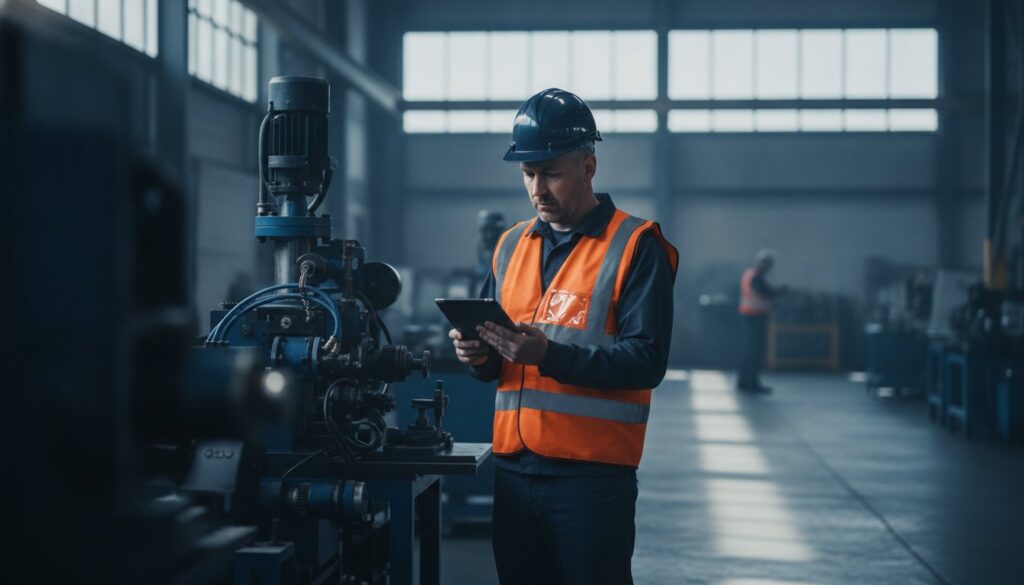
In 2025, the Health and Safety Executive (HSE) secured a 96% conviction rate across 246 prosecutions, resulting in approximately £33 million in fines. For industrial operators and facility managers in Sheffield, these figures represent more than just statistics; they highlight the high stakes of failing to maintain rigorous safety inspections. With the HSE planning 14,000 proactive inspections for the 2025/2026 period, your business cannot afford to rely on guesswork or inconsistent maintenance schedules.
Managing varying inspection frequencies while coordinating different contractors for every safety task is a common struggle. You likely feel the pressure of potential insurance invalidation or the genuine fear of a workplace accident occurring on your watch. This guide provides the clear compliance roadmap you need to master your legal obligations and protect your workforce. We examine the essential requirements for Sheffield firms, covering everything from portable appliance testing to fire extinguisher maintenance and ladder inspections. By the end, you’ll understand how to document your safety diligence to lower insurance premiums and keep your facility running without interruption.
Key Takeaways
- Understand how the 2026 regulatory landscape impacts your obligations under the Health and Safety at Work Act 1974 to ensure total site compliance.
- Learn why professional safety inspections for fire extinguishers and portable appliances must follow strict British Standards to maintain insurance validity.
- Discover the critical role of qualitative face-fit testing and ladder inspections in protecting your workforce during high-risk industrial operations.
- Develop a proactive 2026 inspection schedule that maps asset testing frequencies to specific workplace risk levels and operational demands.
- Identify the criteria for selecting a reliable safety partner in the Midlands and North East who provides transparent, per-item pricing and 25 years of expertise.
Understanding the Legal Framework for Safety Inspections in the UK
In a commercial or industrial environment, safety inspections represent a systematic and documented examination of the workplace to identify hazards and assess risks. These aren’t casual walkthroughs. They are rigorous audits that align with fundamental Occupational safety and health principles to ensure that every piece of machinery, every electrical appliance, and every safety device operates within its design parameters. For facility managers in Sheffield, these inspections act as the first line of defense against operational failure and legal scrutiny.
The Health and Safety at Work Act 1974 remains the primary legislation governing these activities in 2026. While the technology within local factories has evolved, the core legal expectation has not: employers must ensure the health, safety, and welfare of their employees. Documentation serves as your only shield during an HSE audit. Without a clear paper trail of maintenance and testing, you can’t prove you’ve met your legal obligations. This documentation is equally vital for insurance. Most commercial policies include clauses that require you to adhere to statutory testing frequencies; failing to do so gives insurers a legitimate reason to invalidate your coverage following an incident.
The Consequences of Non-Compliance
Failing to maintain equipment leads to more than just operational downtime. In 2025, the HSE secured a 96% conviction rate, with fines totaling approximately £33 million for businesses that neglected their maintenance duties. Beyond financial penalties, “near misses” often signal systemic failures that require reporting under RIDDOR. If an investigation reveals that a director was aware of a safety gap but failed to act, they may face personal liability or disqualification. Professional inspections act as a preventative measure, identifying faults before they trigger these severe legal and financial repercussions.
Duty of Care vs. Absolute Duty
The UK legal system often hinges on the phrase “so far as is reasonably practicable.” This means you must balance the level of risk against the cost, time, and effort needed to mitigate it. However, for specific equipment like fire extinguishers or ladders, the duty often shifts toward an absolute requirement for annual or periodic testing. Understanding where your responsibility lies is a core component of workplace safety. When a standard like BS 5306-3 dictates a service interval, the room for interpretation disappears, making regular safety inspections a strict legal necessity.
Core Electrical and Fire Safety Inspections
Electrical failures remain a leading cause of industrial fires. When an appliance malfunctions, it doesn’t just stop working; it creates a heat source that can ignite nearby materials. This synergy between electrical integrity and fire prevention is why safety inspections must be comprehensive and methodical. Adhering to the Management of Health and Safety at Work Regulations 1999 requires a proactive approach to these combined risks. Beyond the machines themselves, emergency light drain tests are critical. These tests simulate a total power failure to ensure backup batteries can illuminate escape routes for the full duration required by law, typically three hours. Without this verification, your evacuation plan is fundamentally flawed during a real emergency.
Portable Appliance Testing (PAT) for Industrial Sites
In Sheffield’s industrial sector, equipment faces constant exposure to vibration, dust, and mechanical stress. The frequency of testing for a site-based angle grinder or a magnetic drill differs significantly from a standard desktop monitor. While office equipment might only require testing every 24 to 48 months, high-risk industrial tools often need six-monthly or annual checks to remain safe. Professional PAT is more than just applying a green sticker; it’s a technical validation of earth continuity and insulation resistance. A technician starts with a thorough visual inspection. This step is vital because it identifies nearly 90% of all equipment faults, such as frayed cables, heat damage, or cracked plugs, before the technical instrument test even begins. For a deeper look at these specific requirements, consult our portable appliance testing guide.
Fire Extinguisher Servicing Protocols
Annual maintenance of fire fighting equipment is a legal mandate under BS 5306-3. During a professional fire extinguisher servicing visit, technicians examine the physical integrity of each unit. We look for signs of corrosion on the canister, tampering with safety pins, or subtle pressure loss in the gauge. If an extinguisher is obstructed or its weight has changed, it may fail during a crisis. Fire blankets also require periodic inspection to ensure the pull-tabs are accessible and the fabric is free from oil or grease contamination. Maintaining these assets is a technical necessity that protects your property and personnel. If you’re unsure of your current compliance status, we can provide professional health and safety services tailored to your specific facility layout.
Specialised Inspections: Face-Fit and Working at Height
High-stakes industrial environments require more than generic walkthroughs. Respiratory Protective Equipment (RPE) and access equipment demand specialized attention because their failure often leads to immediate, severe injury. While standard safety inspections cover the broader environment, these specific tests focus on the critical interaction between a worker and their life-saving equipment. Many firms attempt to manage these checks “in-house,” but internal reviews often lack the objective rigor or technical calibration required to satisfy an HSE inspector. Professional testing provides the unbiased validation necessary to ensure equipment remains fit for purpose.
Face-fit testing is a legal mandate for any employee required to wear tight-fitting RPE. There’s a technical distinction between qualitative and quantitative methods that facility managers must understand. Qualitative testing is a pass/fail assessment used primarily for half-masks and disposable respirators. It relies on the wearer’s sensory reaction to a test agent. Quantitative testing uses specialized particle-counting equipment to measure actual leakage, typically reserved for full-face masks. Using the HSE guide to risk assessment helps you determine which staff members require this testing based on their specific exposure to hazardous dusts or fumes.
The Qualitative Face-Fit Testing Process
During a qualitative test, the wearer dons a sensitivity hood while a technician introduces an aerosol of either a bitter or sweet substance. If the wearer tastes the agent while performing a series of movement exercises, the mask seal is inadequate. You must repeat this process if an employee undergoes significant facial changes, such as major dental work, scarring, or substantial weight change. It’s also required if you switch to a different brand or model of mask. Maintaining a precise fit-test register is a core part of your safety inspections documentation, providing clear evidence of compliance during audits.
Safe Systems for Ladder and Access Equipment
Industrial ladders face constant mechanical stress and potential damage during transport. While a 12-month inspection cycle is the standard for light use, equipment in high-intensity industrial settings often requires a 6-month professional check. We look for common defects like warped stiles, cracked rungs, or perished rubber feet. Any equipment that fails must receive an immediate “Do Not Use” tag to prevent a fall from height. While formal inspections are periodic, you should train your staff to perform basic pre-use checks every time they use a ladder to catch obvious damage between professional visits.

Building a 2026 Safety Inspection Schedule
For facility managers looking to supplement their safety protocols with high-quality hardware, you can discover Colorado Safety Supply Company and their expert resources on selecting industrial fall protection guardrails.
Effective safety inspections require more than a calendar reminder; they demand a structured framework that accounts for every testable asset on your premises. Start with a comprehensive site-wide audit to catalog everything from hand-held power tools to fixed fire extinguishers. As industrial sites increasingly adopt electric mobility, integrating specialized battery health diagnostics from EVdiagnostika.si into your maintenance routine provides the technical assurance needed to manage high-capacity power systems safely. Mapping inspection frequencies to specific risk levels ensures you don’t over-test low-risk items while neglecting high-vibration tools that suffer rapid wear. This proactive approach prevents equipment failure before it disrupts your production line.
Integrating emergency light testing into your monthly routine is a critical component of this schedule. While annual drain tests are statutory, monthly functional checks ensure that switches and lamps remain operational. Centralising all resulting documentation into a single, accessible repository simplifies the process when an HSE inspector or insurance auditor requests proof of diligence. Having these records ready for immediate review instills confidence in your site management.
Effective tracking begins with a robust tagging system. Every electrical item and fire extinguisher should carry a unique ID number, allowing you to track its history through every test cycle. This system simplifies the re-testing process by identifying exactly which items are due for renewal and preventing missed assets during a sweep. An asset register acts as the primary tool for safety accountability by providing a definitive record of every item requiring periodic verification.
Coordinating Multi-Service Site Visits
Managing multiple contractors for different safety tasks creates unnecessary administrative burden and operational friction. You can significantly reduce downtime by grouping PAT, fire safety, and ladder inspections into a single, planned safety window. This integrated approach ensures that all high-stakes maintenance and safety inspections occur simultaneously, allowing your facility to return to full production faster. While internal safety marshals handle daily checks, coordinating professional site visits ensures that your compliance remains technically sound and legally defensible.
To streamline your 2026 compliance, consider partnering with an expert for comprehensive health and safety services that cover all your statutory requirements in one visit.
Choosing a Safety Inspection Partner in the Midlands and North
Selecting a partner for your commercial safety inspections requires a focus on technical validation and local accountability. You need a consultant who understands the heavy-duty nature of your industry and has the experience to navigate complex regulatory environments. Certification and formal standards are non-negotiable anchors for credibility. AFN Industrial Services leverages over 25 years of industry experience to provide this level of assurance. We don’t offer one-size-fits-all solutions; we deliver tailored maintenance plans that reflect the specific operational challenges of your facility.
Our reach extends across the Midlands and North East, ensuring that firms from Sheffield and Rotherham to Wakefield and Mansfield have access to consistent, professional safety support. Choosing a partner with a deep history in industrial environments means you’re hiring a reliable expert who prioritizes results and precision above all else. This experience ensures that every ladder inspection or PAT test is conducted with a sophisticated understanding of the high-stakes risks involved. We focus on execution rather than promotional embellishment, providing the calm, capable partnership you need in urgent industrial environments.
Why Local Expertise Matters for South Yorkshire Businesses
Industrial hubs in Doncaster, Barnsley, and Scunthorpe face unique environmental challenges, such as heavy dust or high-vibration machinery. A local specialist understands these factors and how they impact the lifespan of your safety equipment. Proximity also translates into rapid response times. When you need urgent documentation for an audit or immediate re-testing after a tool repair, a Rotherham-based partner can be on-site without the delays associated with national providers. Building a long-term partnership with a local expert creates a steady, methodical rhythm for your compliance schedule.
Moving from Compliance to Safety Culture
Professional safety inspections do more than just satisfy the HSE; they help build a proactive safety culture within your workforce. When staff see technicians conducting thorough tests on fire extinguishers or performing qualitative face-fit testing, it reinforces the importance of daily hazard awareness. A visibly safe workplace provides a psychological benefit, instilling confidence in your employees that their welfare is a priority. This shift from “box-ticking” to genuine diligence reduces accident risk and improves overall operational stability. Contact AFN Industrial Services today for a comprehensive site safety review to ensure your facility meets the highest professional benchmarks.
Strengthening Your Industrial Compliance Strategy
Maintaining a secure industrial site requires more than periodic checks; it demands a systematic approach to risk management. By centralising your asset register and mapping testing frequencies to actual usage levels, you eliminate the guesswork that often leads to compliance gaps. Comprehensive safety inspections ensure that every fire extinguisher, portable appliance, and ladder remains a reliable asset rather than a potential liability. This methodical diligence doesn’t just satisfy legal requirements; it protects your most valuable resource, your workforce.
Navigating these complex obligations is simpler with a partner who understands the heavy-duty demands of South Yorkshire’s industrial sector. AFN Industrial Services brings over 25 years of experience to every site visit, providing integrated solutions for PAT, fire safety, and face-fit testing. We serve facility managers across Sheffield, Rotherham, and the wider Midlands with a focus on technical precision and operational continuity. Secure your workplace with professional safety inspections from AFN Industrial Services. Taking control of your compliance today ensures a more stable, predictable environment for the future.
Frequently Asked Questions
How often do I legally need to have safety inspections performed?
Inspection frequency depends on the specific asset and the risk level of your environment. Fire extinguishers require annual servicing under BS 5306-3 to remain compliant. Intervals for portable appliance testing vary based on equipment type; for example, high-use industrial tools in Sheffield factories need more frequent checks than office computers. Statutory safety inspections for ladders often follow a 6 or 12-month cycle depending on the intensity of use and site conditions.
Is PAT testing a legal requirement for all UK businesses in 2026?
While the law doesn’t explicitly use the term “PAT testing,” the Electricity at Work Regulations 1989 require all electrical equipment to be maintained in a safe condition. In 2026, professional testing remains the industry-standard method for demonstrating you’ve met this obligation. Failing to conduct these safety inspections can lead to HSE fines or insurance invalidation if a faulty appliance causes a fire or injury on your premises.
What is the difference between a fire risk assessment and fire extinguisher maintenance?
A fire risk assessment is a comprehensive review of a building’s overall hazards and evacuation plans, which is a service we don’t provide. Fire extinguisher maintenance is the technical servicing of the physical units to ensure they function correctly during an emergency. This includes checking pressure gauges, seals, and the condition of the extinguishing agent. Regular maintenance is a legal requirement under BS 5306-3 to ensure operational readiness.
How long does a qualitative face-fit test take per person?
A standard qualitative face-fit session typically takes approximately 20 to 30 minutes per candidate. This timeframe allows for the initial sensitivity test, the actual fit test exercises, and the necessary documentation. Because the process involves a series of physical movements and sensory checks, it can’t be rushed. We provide per-person pricing models for this service, making it a scalable solution for industrial teams in Rotherham and the surrounding areas.
Can I perform my own ladder inspections in-house?
You can perform daily pre-use checks in-house, but formal periodic inspections must be conducted by a competent person with specific training. Industrial environments in Doncaster and Scunthorpe place heavy stress on access equipment, making professional validation essential for identifying subtle structural defects. A formal inspection provides the documented evidence required for health and safety audits, ensuring your equipment meets the necessary safety standards for working at height.
What happens if an item fails a safety inspection?
Any item that fails an inspection must be immediately removed from service and clearly tagged as “Do Not Use” to prevent accidental operation. For electrical appliances, this might involve cutting the plug or sending the unit for repair. Fire extinguishers that fail their annual service must be replaced or recharged. Promptly addressing failures is a critical part of maintaining a safe workplace and avoiding potential liability during an HSE investigation.
Do I need to keep paper logs of all my safety inspections?
You aren’t legally required to keep physical paper logs, but you must maintain an accessible record of all completed checks. Digital registers are often more efficient for large sites in Wakefield or Barnsley, as they allow for easy searching and backup. Whether digital or physical, your records must include the date of the test, the asset ID, the result, and the name of the competent person who conducted the inspection.
Are safety inspections different for construction sites vs. offices?
The intensity and frequency of inspections vary significantly based on the work environment. Construction sites are high-risk areas where equipment faces extreme mechanical wear, requiring more frequent electrical testing and ladder checks. Office environments generally have lower risk levels, allowing for longer intervals between formal checks. We tailor our health and safety services to match the specific risk profile of your sector, whether you operate a warehouse or a corporate facility.