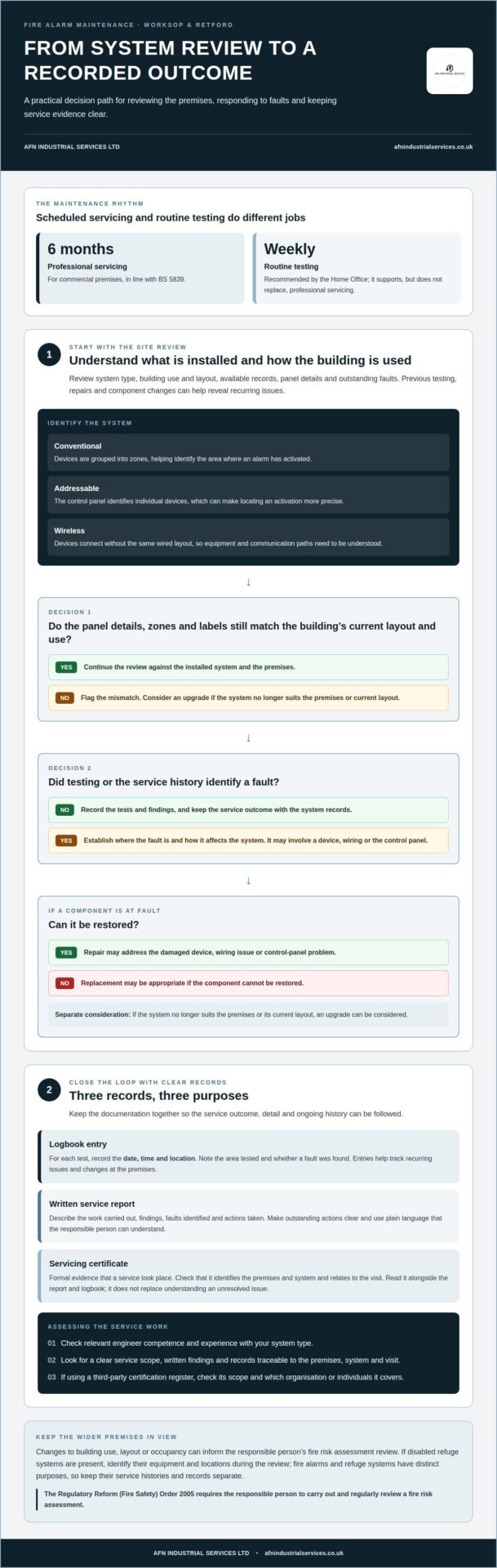
A functioning fire alarm still needs a planned maintenance routine. For commercial premises, professional servicing should take place every six months in line with BS 5839. The Home Office also recommends weekly testing, which supports rather than replaces professional servicing.
It’s reasonable to want clear evidence that the person inspecting and testing the system is competent, and to know what happens when a fault is found. This guide to fire alarm servicing and maintenance in Worksop and Retford explains what a service can involve, how an engineer reviews system type, layout and history, and what to expect from reports and service records. It also covers how servicing intervals relate to routine testing, what information helps assess the work, and what call-out arrangements may form part of a service agreement. You’ll have a clearer basis for understanding the process and the questions that matter for your premises.
Key Takeaways
- Learn how system type, building layout and maintenance history shape an effective fire alarm review.
- Understand what information a service report and certificate can provide, and how records support ongoing fire safety management.
- See how scheduled maintenance and fault call-outs fit into a practical plan for keeping a system in working order.
- Find out how BS 5839 informs workplace fire alarm testing and servicing arrangements.
- Discover how fire extinguisher maintenance and other related safety services can support wider site routines.
Initial review of fire alarm system type, layout and service history
An initial review establishes how the alarm system is configured and what the premises require. The system type, building use, available records and outstanding faults all help determine the checks to be carried out.
System Types and Premises
Conventional systems group devices into zones, helping identify the area where an alarm has activated. Addressable systems identify individual devices on the control panel, which can make locating an activation more precise. Wireless systems connect devices without the same wired layout, so the equipment and communication paths need to be understood during inspection.
Premises use varies. A small office, a warehouse with separate work areas and a building with several occupiers may each have different layouts and alarm arrangements. The review considers how people use each area, how zones are divided, and whether the panel information matches the building. For example, a changed warehouse layout can leave zone descriptions out of step with current operations.
Layout and Service History Review
The engineer reviews available plans, panel details and the fire alarm logbook against the system installed on site. Records of previous testing, faults, repairs and component changes help identify recurring issues and areas that need closer attention. The review also checks whether labels and zone descriptions remain useful after changes to rooms or building use.
In premises with multiple areas, the review traces how the control panel relates to zones, call points, detectors and sounders. Clear records help distinguish a new fault from a recurring issue and support a consistent maintenance plan. The building’s use and layout should be considered alongside the system, rather than treating the alarm equipment in isolation.
Servicing costs depend on the system type, premises layout, equipment and any repair or upgrade work required. Pricing is case-specific, and a quote is provided after a request.
If testing or the service history identifies a fault, the next step is to establish its location and effect on the system. Repairs may address a damaged device, wiring issue or control-panel problem; replacement may be appropriate if a component cannot be restored. An upgrade can be considered if the system no longer suits the premises or its current layout. The records should clearly state the option chosen, work completed and any action still required.
Some buildings also have disabled refuge systems that support communication from refuge areas. Their equipment and locations need to be identified during the initial review, especially if the building layout or access arrangements have changed. Fire alarms and refuge systems serve distinct purposes, so their service histories and records should be kept separate.
The fire alarm review also sits within the wider fire safety arrangements for the building. According to UK Government, the Regulatory Reform (Fire Safety) Order 2005 requires the responsible person to carry out and regularly review a fire risk assessment. Changes to premises use, layout or occupancy can inform that review and help identify whether existing alarm arrangements remain appropriate.
Service reports and compliance certificates
A clear service record connects the work completed with the condition of the alarm system. It gives the responsible person a practical account of the tests, findings and any outstanding actions.
Service Reports and Logbook Entries
During servicing, engineers record tests and findings in the fire alarm logbook and provide a servicing certificate. A separate written report describes the service outcome and issues identified. Together, these records show which checks were completed and which faults still need attention.
For each fire alarm test, record the date, time and location in the logbook. An entry might identify the area tested and note whether a fault was found. Clear records make it easier to track recurring problems across later visits and relate maintenance to changes at the premises.
A useful report explains the work carried out in plain language. The person responsible for fire safety should be able to understand the findings without having to interpret unexplained technical shorthand. If the engineer identifies a fault, the written record should distinguish it from routine test results and describe any action taken.
Servicing Certificates
A fire alarm servicing certificate provides formal evidence that a service took place. Read it alongside the written report and logbook entry, as each record serves a different purpose. The certificate records the service outcome, the report provides detail, and the logbook maintains an ongoing history of tests and findings.
Check that the certificate clearly identifies the premises and system and relates to the service visit. If the report notes an unresolved issue, do not treat the certificate as a substitute for understanding that finding. Keep the documents together so the next review can follow the work and any outstanding actions.
When choosing a fire alarm maintenance contractor in Nottinghamshire, assess relevant competence, experience with your system type and the quality of their reporting. A clear service scope, written findings and traceable records help you judge whether the work addresses your premises’ needs.
Third-party certification registers can provide another way to assess a contractor, but registration should relate to the work being carried out. Check the register’s scope and which organisation or individuals it covers, rather than treating a logo as proof of every capability. The certificate and report should still identify the service, system and findings.
Competent engineers should be able to explain their testing method and record what they find. Their documentation should make clear which checks were completed, what faults were identified and whether further action is needed. This is particularly important when several people manage a site, as clear records support a consistent handover between visits.
For example, if a report records a fault in one area, the logbook should show when it was found and what happened next. That sequence gives the responsible person a useful record for ongoing fire safety management, rather than a certificate without the findings that explain it.
Emergency and scheduled engineer call-outs
Scheduled visits maintain the system, while emergency call-outs address faults that disrupt normal operation. The response process should identify the affected equipment, the fault’s impact and the next safe action.
A call-out may follow a control-panel fault, damaged device, repeated unwanted alarm or loss of part of the system. Start by identifying the message displayed on the alarm panel and the affected zone or device. This information helps the engineer understand the reported problem before attending. Site staff should also explain recent building changes, such as a closed area or relocated equipment.
During an emergency breakdown visit, an engineer investigates the fault, checks related components and determines whether repair or replacement is needed. For example, a detector fault may require inspection of the device and its connection, while a panel fault may call for wider system checks. The engineer should explain what was tested, what has been restored and whether further work remains.
A service arrangement can set out how to report faults, which details to provide and how call-outs are prioritised. Useful information includes the premises address, panel location, displayed fault message and any affected zones. The arrangement should also explain the agreed response process and the distinction between fault investigation, repairs and replacement parts. Clear terms help prevent confusion during a stressful interruption.
Scheduled maintenance provides a planned opportunity to inspect equipment and address developing issues before they cause disruption. The visit can be coordinated around access needs, operational activity and areas that require an escort. If a fault appears between visits, staff should follow the site’s established fire safety procedures and report the panel indication promptly. A service record can then connect the call-out findings with the next planned inspection.
Emergency lighting is a separate safety system, so faults need their own checks and records. A failed fitting, damaged unit or battery issue can affect lighting during a loss of normal power. Emergency lighting checks can assess how the system performs under battery supply conditions. Keeping these results separate from fire alarm records helps site managers track each system’s maintenance status.
For example, if a call-out identifies a device that cannot be restored during the visit, the report should state its location, the fault and any outstanding action. This gives site management a clear basis for arranging follow-up work and informing relevant staff. If the alarm system or emergency lighting changes, the scheduled maintenance plan should reflect the equipment now installed and the areas it serves.
Fire alarm compliance with British Standards
British Standards inform how workplace alarm systems are tested and maintained. Compliance also depends on suitable fire safety arrangements and clear records.
Regulatory Compliance
The Regulatory Reform (Fire Safety) Order 2005 requires the responsible person to carry out and regularly review a fire risk assessment, according to UK Government. That review considers whether the alarm arrangements remain suitable as premises use or layout changes. The responsible person should connect assessment findings with maintenance records and outstanding actions.
For rented and commercial properties, identify who holds the responsible person role and who coordinates practical maintenance. The Order places the assessment and review duty on the responsible person. Lease terms and day-to-day control can help clarify arrangements between landlords and occupiers.
BS 5839 provides the standard reference for workplace fire alarm servicing and testing. BS 5839-1 may appear in system specifications or maintenance documents, so keep the cited part visible in the premises’ records. The applicable reference should align with the installed system and the work documented. Avoid treating a general reference to BS 5839 as a complete record of checks.
A compliance review should connect the system’s service history with the building’s current fire safety arrangements. For example, after an office layout changes, records should show whether alarm zones and device locations still match the premises. The review can also identify gaps between recorded work and actions arising from the fire risk assessment.
Useful records include the service report, certificate, logbook entries and details of unresolved faults. These documents help show what was inspected, what testing took place and whether follow-up work remains. Keep relevant records together so the responsible person can track actions and inform future reviews without relying on memory.
Consequences of Poor Maintenance
What happens if a workplace fire alarm is not maintained? A fault may leave a detector, sounder or zone unable to operate as expected. Staff may receive a delayed or incomplete warning, while missing records make it harder to establish the system’s condition and work history.
Failure to maintain a system can leave known defects unresolved and weaken the premises’ wider fire safety arrangements. Record faults, assess their effect and arrange corrective action. Maintenance records help demonstrate how issues were handled, but they do not replace an effective system or a current fire risk assessment.
At each review, compare documented maintenance with the system installed and the building’s actual use. A changed room, new partition or altered occupancy can affect whether existing arrangements remain suitable. Clear records give the responsible person a traceable basis for decisions and follow-up, supporting consistent fire safety management across the premises.
Fire alarm maintenance and servicing
Commercial fire alarm systems need planned testing and professional attention. The routine combines weekly user checks with periodic servicing and recorded findings.
For businesses in Worksop and Retford, professional fire alarm servicing and maintenance is carried out by competent engineers familiar with the system installed. Commercial systems should be professionally serviced every six months following BS 5839. The Home Office recommends weekly testing, which helps identify obvious issues between service visits. These checks complement each other; neither replaces the other.
A scheduled inspection should cover the control equipment and system devices, including detectors, sounders and manual call points. The engineer checks operation, visible condition and whether the panel responds as expected. Testing devices in a planned sequence helps identify faults across different areas, rather than focusing on one convenient location. The exact work depends on the equipment and site layout.
Weekly testing gives premises staff a routine way to check that an alarm can be activated and heard. Record the test in the fire logbook, including its date, time and location. If the system is connected to a monitoring centre, contact it before and after testing. This helps avoid confusion about a planned alarm signal and preserves a useful record of the check.
Professional servicing also looks beyond a successful activation. An engineer can inspect the system’s condition, review reported faults and identify equipment needing repair or further attention. Testing every detector, sounder and call point at least once annually helps build wider coverage over time. The service report should distinguish completed checks from unresolved defects, so site management can plan follow-up action.
Fire alarm maintenance companies serving Worksop and Retford, such as AFN Industrial Services Ltd, should explain their inspection scope, testing approach and reporting process. The system type, premises layout, access requirements and recorded faults shape the planned visit. Clear records help the responsible person understand what was tested and what needs attention.
- Schedule professional servicing every six months for commercial systems, following BS 5839.
- Arrange weekly system testing and record each test in the fire logbook.
- Plan device testing so detectors, sounders and call points receive coverage over time.
- Keep monitoring-centre contact procedures and follow-up actions clear in site records.
An annual inspection of a commercial system can provide an additional review of its overall condition. This is distinct from the six-monthly professional servicing interval and weekly testing. For premises with changing layouts, inspection findings can help identify where system arrangements or records need attention. The practical takeaway is to combine routine user testing, scheduled professional servicing and clear records to maintain oversight between visits.
In addition to standard schedules, comprehensive assessments ensure complete coverage of system conditions. The Home Office says testing should be weekly; a weekly test takes five minutes. High-risk care homes and hotels warrant quarterly inspections to maintain optimal safety.
AFN Industrial Services: Fire Extinguisher Maintenance
AFN Industrial Services Ltd supports businesses with fire extinguisher maintenance, a separate part of site fire protection. If your premises also need wider safety tasks organised, its services include Portable Appliance Testing, Emergency Light Drain Tests and Health and Safety Services.
These services complement a fire alarm maintenance plan but do not replace alarm servicing. For example, a site manager can coordinate emergency lighting checks alongside other planned safety work, while keeping records for each system separate. This helps maintain oversight without confusing the different checks each area requires.
For support with fire extinguisher maintenance or related site safety work, contact AFN Industrial Services Ltd.
Build a stronger safety plan for your premises
Use maintenance findings to shape a practical plan for the next stage of your site’s safety work. Keep responsibilities clear, include follow-up actions in routine planning, and consider how different safety systems fit together across your premises. A consistent approach to Fire Alarm Servicing and Maintenance in Worksop and Retford can sit alongside attention to other equipment and workplace procedures.
AFN Industrial Services Ltd supports related site requirements through Fire Extinguisher Maintenance, Portable Appliance Testing and Emergency Light Drain Tests. These services address separate areas of workplace safety and can help you organise maintenance with a clear view of each task.
If you’re ready to discuss the safety work your premises need, contact AFN Industrial Services Ltd. Take the next step with a focused plan for your site.
Frequently Asked Questions
Are you qualified & accredited?
Fire alarm servicing should be carried out by a competent engineer with qualifications relevant to the system and work. Accreditation depends on the certification scheme and its scope. For premises in Worksop or Retford, review whether the engineer’s training and any third-party registration cover the installed system. Keep the service record with the certificate so it is clear what was inspected, what was tested and whether any faults remain unresolved.
How often should commercial fire alarms be serviced in the UK?
Commercial fire alarm systems should be professionally serviced every six months following BS 5839. The Home Office recommends weekly testing, which does not replace the engineer’s scheduled service. Plan visits around access to occupied areas, plant rooms and control equipment. Record any missed or interrupted checks, then arrange completion so the maintenance history reflects what was actually tested and when.
What is included in a fire alarm service visit?
A service visit typically involves reviewing the system and its records, inspecting equipment, testing selected devices and documenting findings. Checks may include the control panel, detectors, sounders and manual call points. The engineer records faults and actions taken, then provides a written report and servicing certificate. The scope depends on the system installed, its layout and issues identified during the visit.
Fire alarm servicing contracts and emergency call-out response times near Worksop
A service agreement can set out how to report faults, prioritise call-outs and agree response arrangements. Provide the premises address, panel location, displayed fault message and any affected zones.
