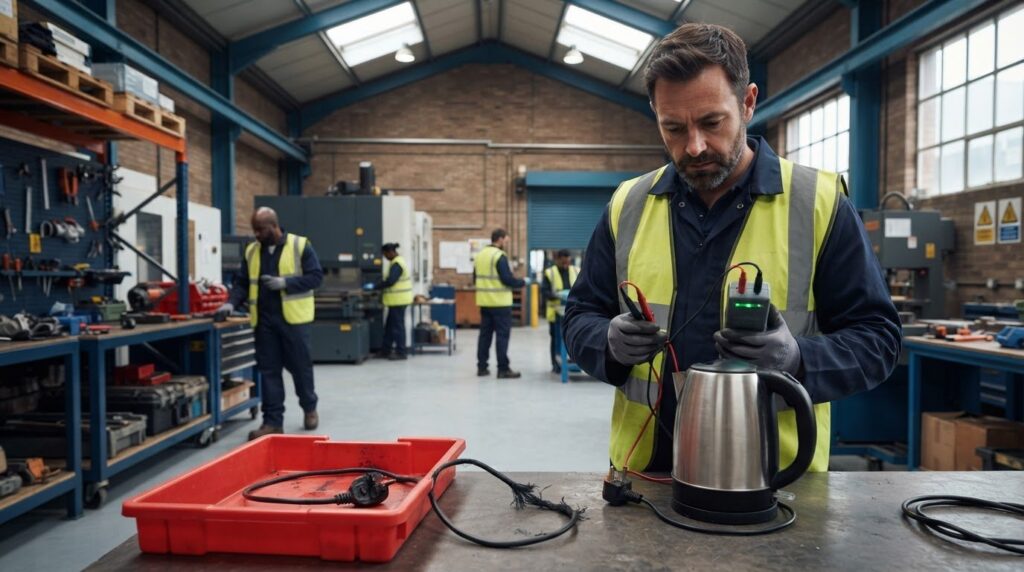
A PAT test can reveal a hazard, but it cannot prevent a fire unless someone acts on the result. That distinction matters when asking, “How PAT Testing Prevents Electrical Fires and Accidents?” In Sheffield workplaces, a competent inspection and test can identify certain faults in appliances, plugs and cables before continued use increases the risk of electric shock or fire.
It is understandable to want a clear pass or fail answer, especially when safety duties and testing guidance can seem confusing. PAT testing is not a specific legal requirement, and a pass result does not guarantee that an appliance will remain safe or prevent every incident. Employers must ensure electrical equipment is maintained in a safe condition, with checks suited to the risks and working environment.
This article explains which hazards testing can help identify, what its limits are, and how to respond to failed, damaged or questionable appliances. It also covers how to make PAT testing part of a practical electrical safety programme, rather than treating a test label as the whole solution.
Key Takeaways
- Learn how damage, misuse and electrical faults can create risks ranging from overheating and fire to electric shock and trips.
- Understand how visual checks, appropriate instrument testing and routine user checks each help identify appliance hazards.
- See how How PAT Testing Prevents Electrical Fires and Accidents? depends on recognising hazards and acting on test findings.
- Follow practical steps for restricting use of a questionable appliance and arranging competent repair and checks before it returns to service.
- Build an equipment register and set inspection intervals according to the equipment, its environment, risk level and previous findings.
How PAT testing helps reduce electrical fire and accident risks
A damaged appliance can create a hazard during ordinary work, not just after a major incident. A cable dragged across a workshop floor, a plug repeatedly pulled from a socket, or equipment used in a busy office can deteriorate over time. PAT testing helps identify some problems before an appliance continues to be used, but it cannot guarantee the equipment will stay safe afterwards.
Portable appliance testing (PAT) combines a visual inspection with electrical tests where appropriate. The checks are selected to suit the appliance and help assess whether it appears safe for continued use at the time of inspection. The practical answer to “How PAT Testing Prevents Electrical Fires and Accidents?” is that testing can reveal warning signs early enough for someone to take the appliance out of use or arrange suitable action.
Which electrical appliance faults can create danger?
Look for damaged plugs, worn or frayed cables, loose connections and cracked casings. These faults do not always lead to an incident, but they can expose live parts, compromise insulation or contribute to overheating. Depending on the fault and circumstances, possible outcomes include electric shock, burns or fire.
Consider an extension lead that is frequently moved between work areas. Repeated pulling, bending or contact with equipment could damage its cable or plug. If the damage goes unnoticed, continued use may increase risk, particularly if the lead is also used incorrectly or placed where it could be crushed.
How inspection and testing support prevention
A visual inspection can reveal external damage, loose components, signs of overheating or other defects that may not affect an appliance’s normal operation straight away. Appropriate electrical tests can then assess relevant safety conditions that a visual check alone cannot confirm. The checks should suit the equipment, rather than applying the same test to every item.
Testing is one control, not a substitute for careful use. Staff should stop using equipment if they notice damage, unusual heat, a burning smell or other signs of a fault, and report the concern through workplace procedures. Routine user checks between formal inspections also matter because damage can occur at any time.
PAT testing helps reduce electrical risk by identifying defects that need attention. It cannot eliminate risk or predict every future failure. Its value comes from combining suitable inspection and testing with prompt decisions about suspect equipment, correct operation and ongoing checks.
How electrical faults can lead to fires, shocks, and workplace accidents
An electrical incident can begin with a small defect or unsuitable use of equipment. Damage may weaken insulation or affect a connection. If current flows through a compromised part, the fault may produce heat or arcing, which could ignite nearby materials in some circumstances. The outcome depends on the equipment, the fault and how it is being used. A defect is a warning to act, not proof that a fire will occur.
From damaged equipment to overheating or ignition
Heat can build if equipment is overloaded, used beyond its intended purpose or connected in an unsuitable way. A PAT test may identify some defects in an appliance, but it does not assess every aspect of how equipment is used or detect every overload in a workplace. Staff should follow manufacturers’ instructions and report equipment that becomes unusually hot, smells of burning or behaves unexpectedly. For further context on workplace electrical safety, consult the HSE guidance on PAT testing.
Electrical fire is only one possible outcome. A fault that exposes a live conductor could present a shock risk if someone touches it. Depending on the circumstances, contact with electricity may also cause burns or a sudden reaction that leads to another injury. These risks differ from fire, so a safe response should consider the specific hazard rather than treating every appliance defect as the same problem.
From electrical defects to shocks and other accidents
Damaged insulation can leave conductors exposed or reduce the protection between live parts and a user. In a busy workplace, a damaged lead can create a separate physical hazard if it trails across a walkway and someone trips over it. Routing cables safely helps reduce trip risks, but it does not make damaged equipment fit for use.
Routine visual checks by users can catch changes between formal inspections. Workers should know how to report a concern and avoid using equipment they suspect is damaged. If an appliance fails a test or appears unsafe, remove it from use, prevent others from using it, and arrange assessment or repair by a competent person before it returns to service.
That is the practical answer to How PAT Testing Prevents Electrical Fires and Accidents?: testing can help bring certain hazards to light, while reporting, correct use and timely follow-up address risks that a test alone cannot control. Sheffield businesses reviewing their inspection needs can discuss portable appliance testing with AFN Industrial Services.
What PAT testing can and cannot tell you about electrical safety
PAT testing gives you information about the appliances included in the inspection, not a complete picture of electrical safety across a workplace. A visual inspection can identify visible damage, while appropriate instrument tests assess relevant electrical safety conditions that a visual check cannot confirm. Routine user checks help spot changes between formal inspections, such as a new crack, damaged cable or sign of overheating.
A pass result records the outcome at the time of testing. Equipment can be damaged, worn or misused afterwards, so a label is not a permanent guarantee. The Health and Safety at Work etc. Act 1974 and Electricity at Work Regulations 1989 require electrical equipment to be maintained safely, but PAT testing itself is not a specific legal requirement. The HSE guidance on PAT testing explains the need to choose suitable maintenance measures for the risks involved.
PAT testing versus fixed electrical installation inspection
PAT testing concerns portable appliances, such as movable tools or office equipment. It does not assess the condition of a building’s fixed electrical installation, including its wiring and circuits. If you need the fixed installation checked, consult an appropriately qualified provider for advice on the relevant inspection. Keep the scope clear: appliance testing and fixed installation inspection address different parts of workplace electrical safety.
For broader process detail, refer to a dedicated guide to portable appliance testing alongside the information recorded for your own equipment. Keep the distinction in mind when reviewing what a test result does and does not cover.
Why a pass label is not a safety guarantee
A pass label is a snapshot, not a promise of future condition. Staff should report defects promptly and stop using equipment they suspect is unsafe. The comparison below shows how testing fits with ongoing checks and follow-up.
| Control | What it contributes | Who acts |
|---|---|---|
| Test result | Records the appliance’s condition and relevant test outcome at inspection | Competent tester documents findings |
| Ongoing checks | Can catch damage or misuse that arises later | Users report concerns; managers follow workplace procedures |
| Follow-up | Ensures failed or questionable equipment is assessed and addressed | Responsible staff arrange action before return to use |
This is central to understanding How PAT Testing Prevents Electrical Fires and Accidents?: testing can identify certain appliance hazards, but safe outcomes depend on clear responsibilities and action after the inspection.

What to do when PAT testing identifies a potential hazard
A failed result or visible defect needs a clear response, not just a note on a test record. Treat the finding as a prompt to control the risk, decide what action is appropriate and document that decision. A failed appliance may be repairable, but it should not return to use until it has been assessed and checked as suitable.
Immediate actions for failed or visibly damaged equipment
If an appliance is suspected of being unsafe, stop using it, isolate it where safe and practicable, and prevent anyone else from using it until it has been assessed. Follow your site’s established safety procedures, especially if the hazard appears urgent. Do not handle or disconnect equipment if doing so could expose someone to danger.
Use a clear label or another reliable method to identify the item as out of use. If it can be moved safely, keep it separate from equipment ready for use. Then:
- Record the appliance identity, location and reason for concern.
- Tell the person responsible for workplace equipment or safety.
- Arrange assessment by a competent person and decide whether repair or replacement is suitable.
This process helps prevent a failed item being returned to a desk, workshop or shared equipment area by mistake. If there is an immediate electrical hazard, escalate it through the site’s established procedures rather than waiting for routine follow-up.
Repair, retest, and record the outcome
The right decision depends on the defect, appliance and workplace need. A damaged lead might be repairable, while an appliance with a more serious fault may need replacement. Repairs should be carried out by a competent person. Before equipment returns to service, arrange suitable checks to confirm it is safe for use.
Keep a record that follows the item from finding to final decision. Include its identity and location, the test or inspection result, the action taken, who completed the work, and the outcome of any checks after repair. Record whether it was returned to service, replaced or kept out of use. This creates a practical audit trail and helps identify recurring faults or equipment that needs closer attention.
Acting on findings is central to How PAT Testing Prevents Electrical Fires and Accidents? A test can flag a concern, but prompt isolation, competent follow-up and clear records turn that information into a workplace safety control. Sheffield businesses can discuss portable appliance testing and appropriate next steps with AFN Industrial Services.
Build a practical PAT testing plan for your workplace
A useful PAT testing plan starts with knowing what equipment you have, where it is used and what has happened to it before. Keep an equipment register that lets staff and those organising inspections identify each item and track findings, rather than relying on labels alone.
For each appliance, record:
- A unique identifier and description
- Its usual location and working environment
- Condition, inspection findings and test history
- Any repairs, follow-up checks and decisions about continued use
This record helps you spot repeat faults, locate equipment due for attention and make informed decisions when the workplace or equipment changes. It also gives staff a clear reference when they report a concern.
Set a proportionate testing and inspection schedule
Do not apply one fixed interval to every appliance. Plan inspection and testing with competent, risk-based advice, taking account of how often equipment is used, the conditions it works in, how frequently it is moved, previous damage and who uses it. A tool used in a demanding environment may need a different approach from equipment that stays in a clean, low-use office.
Review the schedule after equipment changes, incidents, repairs or repeated failures. A pattern of damage may point to the need for a different control, such as improving storage or cable routing, rather than simply testing more often.
Keep safety active between tests
Include appliance checks in staff induction. Explain how to spot visible damage, report concerns and keep suspect equipment out of use. Make the reporting route clear, including who receives reports and who decides on follow-up. Periodic reviews of the register can then confirm that findings have been addressed and that the inspection plan still reflects actual working conditions.
This ongoing system is central to How PAT Testing Prevents Electrical Fires and Accidents? Testing contributes useful information, but staff awareness, prompt reporting and organised follow-up help maintain control between inspections.
Arrange local PAT testing and keep follow-up organised
AFN Industrial Services provides portable appliance testing for commercial and industrial clients. Businesses in Bawtry, Sheffield, Rotherham, Doncaster, Worksop, Retford, Wakefield, Barnsley, Mansfield, Scunthorpe and Pontefract can discuss their inspection needs, including the number and types of appliances and the conditions in which they are used. Keep the agreed scope and resulting actions with your equipment records.
AFN Industrial Services also provides fire extinguisher maintenance, alongside portable appliance testing. Keeping equipment checks organised as part of wider workplace safety arrangements makes it easier to track findings and follow-up. To discuss portable appliance testing for your workplace, contact AFN Industrial Services.
Make electrical safety part of the routine
PAT testing can help identify appliance defects before they lead to harm, but the result is only useful when concerns prompt action. Remove failed or suspect equipment from use, arrange competent follow-up, and record the outcome before it returns to service.
Remember that appliance testing is one part of workplace electrical safety. Keep an equipment register, set inspection intervals to reflect actual risks, and encourage staff to report damage between tests. This is the practical answer to How PAT Testing Prevents Electrical Fires and Accidents?: testing supports risk reduction, while ongoing checks and timely decisions help maintain safety.
AFN Industrial Services provides portable appliance testing for commercial and industrial clients in Bawtry, Sheffield, Rotherham, Doncaster, Worksop, Retford, Wakefield, Barnsley, Mansfield, Scunthorpe and Pontefract. If you are reviewing your equipment or planning inspections, discuss PAT testing for your workplace with AFN Industrial Services.
A clear process helps your team respond with confidence and keep electrical safety firmly in view.
Frequently Asked Questions
Can PAT testing prevent electrical fires?
PAT testing can help reduce fire risk by identifying certain faults in portable appliances before they cause harm, but it cannot prevent every fire. A damaged plug, cable or casing may be found during inspection, and appropriate electrical tests can reveal other safety concerns. The benefit depends on acting on the findings: remove suspect equipment from use and arrange suitable follow-up. Safe operation and user checks remain important between tests.
Does PAT testing prevent electric shocks and workplace accidents?
PAT testing can help identify defects that may contribute to electric shock, burns or other incidents, but it does not eliminate these risks. Damaged insulation or exposed conductors may present a shock hazard, while a lead across a walkway could cause someone to trip. Staff should report damage or unusual behaviour promptly and stop using suspect appliances. How PAT Testing Prevents Electrical Fires and Accidents? It supports prevention when findings lead to timely action.
Is PAT testing a legal requirement in the UK?
No. UK law does not specifically require businesses to carry out PAT testing or set a universal testing interval. Under the Health and Safety at Work etc. Act 1974 and the Electricity at Work Regulations 1989, employers must ensure electrical equipment is maintained to prevent danger. PAT testing is one way to help manage and demonstrate safe maintenance. The checks needed should reflect the equipment, its use and the risks in the workplace.
What happens if an appliance fails a PAT test?
Stop using the appliance and, where safe and practicable, isolate it so it cannot be used accidentally. Identify it clearly as out of use, record the fault and tell the person responsible for workplace equipment or safety. A competent person should assess whether repair or replacement is appropriate. Before repaired equipment returns to service, arrange suitable checks and document the outcome and return-to-use decision.
Does a PAT pass label mean an appliance is always safe?
No. A pass label reflects the appliance’s condition and test outcome at the time of inspection. Equipment can be damaged, worn or misused afterwards, so the label is not a guarantee of ongoing safety. Staff should continue to check equipment during normal use and report concerns such as damaged cables, cracked casings, unusual heat or burning smells. Remove an appliance from use if it appears unsafe, even if its label shows a pass.
How often should workplace equipment be PAT tested?
There is no single testing interval that suits every appliance or workplace. Set a proportionate schedule based on risk, equipment type and use, the working environment, how often items are moved, and previous findings. For example, equipment exposed to demanding conditions may need a different inspection approach from an item used occasionally in a clean office. Review the schedule after damage, incidents, repairs, equipment changes or repeated failures.
Can PAT testing replace an EICR?
No. PAT testing checks portable appliances, while an EICR concerns the fixed electrical installation, such as wiring and circuits. One does not replace the other because their scope is different. If you need the fixed installation inspected, consult an appropriately qualified provider. AFN Industrial Services provides portable appliance testing for commercial and industrial clients in Bawtry, Sheffield, Rotherham, Doncaster, Worksop, Retford, Wakefield, Barnsley, Mansfield, Scunthorpe and Pontefract.