A safe industrial site needs more than written procedures; it needs methods and systems that work in day-to-day operations. An industrial safety consultant in Doncaster can help businesses review safe work methods, management systems, audits, inspections and safety policies. According to UK Legislation, relevant laws include the Health and Safety at Work Act 1974, the Management of Health and Safety Regulations 1999 and the Regulatory Reform (Fire Safety) Order 2005.
For facility managers, the challenge is making safety arrangements clear, practical and suited to the work taking place. This article explains how an industrial safety consultant in Doncaster can support that process and what to consider when choosing support for an industrial workplace.
You’ll learn what audits and inspections can examine, how safe systems of work and policies fit into a wider management system, and how to identify gaps that need attention. The aim is a clearer, more organised approach to workplace safety, grounded in the demands of your site.
Key Takeaways
- Match safe work methods to the tasks, equipment and site conditions workers face each day.
- Use a safety management system to organise responsibilities, procedures and follow-up actions.
- Plan audits and inspections around the risks they need to identify, then record and address findings.
- Keep safety policies practical, clear and aligned with how work is carried out across the site.
- Identify when specialist support with health and safety services or fire extinguisher maintenance can help strengthen your arrangements.
Health and safety consultancy in Doncaster
Industrial businesses in England must identify the health and safety and fire safety rules relevant to their work. For Doncaster Council’s health and safety service for schools, UK Legislation (The National Archives) lists the Health and Safety at Work Act 1974, the Management of Health and Safety Regulations 1999, and the Regulatory Reform (Fire Safety) Order 2005.
Consultancy helps organisations turn applicable requirements into practical arrangements for their workplace. Effective support reflects the tasks, people, equipment and site conditions involved.
Competent Health and Safety Advice
Competent advice starts with understanding the work, not simply supplying standard paperwork. An industrial safety consultant in Doncaster should consider workplace activities, existing assessments, equipment and how staff carry out tasks.
On a construction site, advice may need to account for changing work areas, contractors and site-specific procedures. In manufacturing, the focus may instead include machinery, maintenance work and how operational instructions are communicated. These examples show why advice must fit the actual workplace.
Schools in Doncaster need competent health, safety and fire safety advice to fulfil their statutory duties. Useful support helps school leaders identify responsibilities, organise relevant documentation and address issues in a clear sequence. For any organisation, recommendations should explain what needs attention and how proposed actions relate to its work.
Health and Safety Policy Support
A health and safety policy should explain how an organisation manages safety in practice. Support can help clarify who holds responsibilities, how staff receive instructions, and how concerns or incidents are escalated.
Start by comparing the written policy with actual working arrangements. If a policy describes an approval step that supervisors do not use, resolve the gap. Review roles, reporting routes and procedures against how teams operate across the site.
For schools, the City of Doncaster Council has a Health & Safety Policy for the 2024/25 financial year. That named example shows the value of a documented policy tied to an organisation and period. Businesses can use a structured review to keep their own policy relevant to current activities, rather than relying on generic wording that staff cannot apply.
Consultant Services, Costs and Qualifications
Consultants can help with health and safety advice, assessments, policy support and reviews of workplace arrangements. The right scope depends on the organisation’s activities and where it needs support. Define the site, tasks and desired outputs first, then agree the consultancy scope.
The price depends on the scope, site complexity and documentation required, and is given after a quote request. A focused review of existing procedures differs from support involving multiple work areas, detailed assessments or substantial policy development.
An unqualified consultant may overlook hazards, give advice that does not fit the work, or produce procedures employees cannot follow. This can leave managers with unclear actions and unresolved safety issues. Look for relevant experience, clear reasoning and recommendations grounded in the workplace. Establish how findings will be recorded and prioritised, then assign responsibility for each agreed action.
Safe methods of work and safety management systems
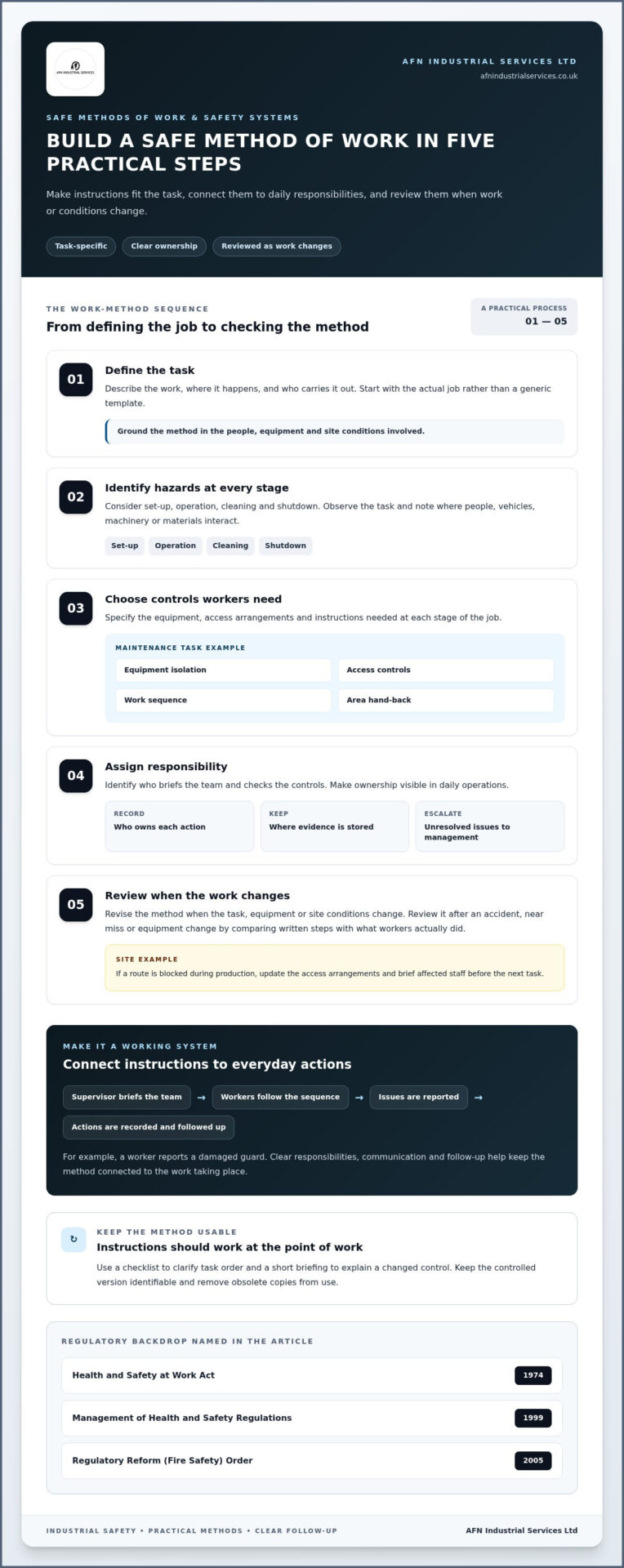
A safe method of work sets out how to complete a task, from preparation to completion. A safety management system connects those instructions with responsibilities, staff communication and follow-up. For example, a maintenance task can specify equipment isolation, access controls, the work sequence and how the area is handed back.
Build each method around the actual job, not a generic template. Observe the task and identify where people, vehicles, machinery or materials interact. Then record the controls workers need at each stage. A procedure for loading a delivery vehicle, for instance, should reflect the layout and movement of that site.
A practical development process can follow these steps:
- Define the task: describe the work, where it happens and who carries it out.
- Identify hazards: consider each stage, including set-up, operation, cleaning and shutdown.
- Choose controls: specify the equipment, access arrangements and instructions workers need.
- Assign responsibility: name the person who briefs the team and checks the controls.
- Review the method: revise it when the task, equipment or site conditions change.
For a safety management system to work, responsibilities need to be visible in daily operations. A supervisor might brief a team before maintenance begins, while workers follow the written sequence and report a damaged guard. Record who owns each action, where evidence is kept and how unresolved issues reach management. These details make safety advice a working process, not a document stored away.
After an accident, near miss or equipment change, review whether the method still fits the job. Compare the written steps with what workers actually did, then identify any difference. If a route is blocked during production, for example, update access arrangements and brief affected staff before the next task. Site-specific examples help teams in Doncaster, Rotherham and Retford apply procedures to their own workplaces.
Keep worker instructions direct and easy to use at the point of work. A checklist can clarify the order of a task, while a short briefing can explain a changed control. Keep the controlled version identifiable, remove obsolete copies from use and record when teams receive revised instructions. An industrial safety consultant in Doncaster can help examine these arrangements and identify practical improvements. For support shaping workplace procedures, explore practical safety arrangements.
Safety audits, reviews and inspections
Audits, reviews and inspections examine different parts of workplace safety, from documented arrangements to shop-floor conditions. For manufacturers in Doncaster, combining these checks can reveal whether procedures match actual production activities.
Safety Audits and Inspections
An audit examines whether an organisation’s safety arrangements are defined, recorded and followed. An inspection focuses more directly on workplace conditions, equipment and practices. For example, a manufacturing inspection might examine walkways, machine guarding, storage areas and access equipment, while an audit checks how findings are recorded and followed up.
Set the scope before starting. Identify the work areas, equipment and sectors to include, then apply consistent criteria to record observations. Note each issue’s location, condition and potential consequence. Assess engineering controls, such as physical barriers, alongside instructions and staff practices. Specific findings give managers a clearer basis for action.
Safety Reviews
A safety review considers whether existing arrangements remain suitable after changes to equipment, processes, staffing or site layout. Adding a production line, for example, may alter pedestrian routes, maintenance access and how materials move through a building. Compare current practice with documented procedures, then record gaps, owners and follow-up actions.
Reviews can also consider patterns in inspection findings and accident reports. If similar concerns arise in different areas, investigate whether they share a cause, such as unclear instructions or a recurring equipment issue. Prioritise actions by potential impact and practicality, then assign a responsible manager and completion date. Keep a traceable record of review decisions.
Health and Safety Risk Assessments
For a health and safety risk assessment in Doncaster, define the work to assess, review the workplace and record hazards, existing controls and further actions. Include the people affected and task stages, such as set-up, operation, cleaning and maintenance.
For a production process, walk through the task with relevant workers and examine how machinery, materials and people interact. Record each hazard clearly, identify existing controls and note any additional measures required. A useful assessment names the action owner and explains how the measure will be put into practice. Keep the document accessible to the managers and workers involved.
Review the assessment when a process changes, an inspection identifies a new concern or an accident points to a control gap. Check whether the recorded controls are still present and effective in the work area. Keep revised versions identifiable and communicate changes to affected teams. This connects risk assessments with routine inspections and management decisions instead of treating them as isolated paperwork.
Safety policies and systems
A written policy gives managers and workers a shared reference for safety responsibilities and procedures. In Doncaster, the City of Doncaster Council’s Health & Safety Policy is identified for the 2024/25 financial year.
Workplace health and safety legislation covers employees, customers and passers-by. A policy should reflect how people enter, move through and work around a site. For example, a factory’s arrangements may need to explain visitor sign-in, delivery access and how staff report a hazard. Clear instructions help teams follow a consistent approach across work areas.
Build the document around the organisation’s actual management structure. Identify who approves procedures, communicates changes and receives incident reports. A named site manager might coordinate local actions, while supervisors brief teams on relevant work methods. Record responsibilities in plain language so each person can identify the part they control.
A useful policy connects broad commitments with working procedures. A statement about maintaining safe equipment, for example, should link to the process for reporting defects, restricting use and arranging follow-up. Keep supporting documents organised, with a clear title and version date. Staff should be able to find current instructions without relying on an outdated printed copy.
Safety training helps workers understand the parts of the system that apply to their tasks. A new starter operating packaging equipment, for instance, needs task-relevant instructions before taking on that work. Supervisors can use briefings to explain a revised method, while training records show who received the information. Match training to job duties, site hazards and changes in equipment or processes.
Use planned reviews to keep policies aligned with operations. Check whether assigned roles remain accurate, procedures reflect current work, and staff know how to raise concerns. A change in site layout may require revised access instructions; a new reporting route may require updated contact details. Record the review outcome and assign resulting actions to named owners.
Make the system usable where work happens. A supervisor checking a maintenance task should be able to find the relevant procedure, explain the required controls and record a concern through the stated route. Keep policy language direct and separate essential instructions from background material. This makes documents easier to use during routine work and safety training.
For a final check, compare the policy with a real task and ask whether workers can follow its steps. If a procedure says to report damaged equipment, confirm staff know where to report it and who responds. This practical test reveals gaps between written arrangements and site practice, helping managers keep the policy connected to everyday work.
What services do Doncaster health and safety consultants provide?
Consultancy can help organisations turn workplace concerns into clear, managed actions. The scope may include reviewing existing arrangements, identifying gaps and setting out practical improvements for specific work areas. A warehouse review, for example, could examine how staff, vehicles and stored materials interact during routine operations.
Support starts with understanding the organisation’s activities and priorities. A consultant may discuss tasks with managers, observe work on site and review relevant records. This connects recommendations to actual conditions rather than assumptions. An industrial safety consultant in Doncaster might, for instance, examine how maintenance work is planned alongside normal production.
Written outputs can help managers coordinate follow-up. Depending on the agreed work, these may include documented assessments, audit findings, safe working procedures or policy recommendations. A useful report identifies each issue, explains why it matters and sets out a practical action. Managers can then assign responsibility and track completion.
Consultants can also support the implementation of improvements. A procedure may need clearer task steps, or a reporting route may need to be easier for staff to use. The aim is to make arrangements workable and relevant to the site. Recommendations for a small workshop, for example, should reflect its equipment and staffing, not copy a large factory’s process.
Choose the scope around the problem you need to solve. If procedures are difficult to apply, focus on how tasks are planned and communicated. If records show recurring concerns, review the underlying arrangements and agree follow-up actions. For a wider review, define the areas, documents and work activities to include before starting. A clear scope helps everyone understand the intended outputs.
Good consultancy should leave managers with practical next steps, not just observations. Prioritise findings, assign actions to roles and keep a clear progress record. Staff input can reveal where instructions conflict with normal working practice. A short discussion with the team performing a task may uncover details a document review alone would miss.
For Doncaster businesses, the right support depends on the site, work and specific safety concern. A focused project may suit a defined documentation gap, while broader support can address several connected arrangements. To discuss practical workplace safety support, talk about your health and safety needs.
AFN Industrial Services: Fire Extinguisher Maintenance
AFN Industrial Services Ltd provides Fire Extinguisher Maintenance for businesses that need support maintaining workplace fire extinguishers. As a trusted industrial safety consultant Doncaster operations rely on, its services also include Fire Extinguishers, Portable Appliance Testing, Emergency Light Drain Tests and Health and Safety Services.
Turn to AFN Industrial Services Ltd for these specific workplace safety needs. A business arranging extinguisher maintenance, for example, can also consider whether Portable Appliance Testing or Emergency Light Drain Tests suit its operational requirements. Health and Safety Services provide support with broader workplace safety arrangements.
These services address distinct requirements, so identify the task you need help with before getting in touch. Contact AFN Industrial Services Ltd to discuss your workplace safety needs.
Set a clear next step for workplace safety
Choose one practical improvement to address first, assign an owner and decide how to record progress. This gives your team a manageable starting point and keeps safety actions connected to everyday operations. An industrial safety consultant in Doncaster can help businesses identify support that fits their priorities, whether they need help with broader health and safety arrangements or specific workplace equipment.
AFN Industrial Services offers Fire Extinguisher Maintenance, Portable Appliance Testing and Emergency Light Drain Tests. These services support businesses with those particular maintenance and testing needs. Set out the issue you want to address, along with the relevant site or equipment details, before taking the next step.
Contact AFN Industrial Services to discuss your workplace requirements and identify a practical way forward. A clear scope helps start the conversation on firm, useful terms.
Frequently Asked Questions
What support is available locally?
Industrial safety consultants help businesses address workplace safety needs through advice, reviews and practical support. AFN Industrial Services Ltd provides Health and Safety Services, alongside Fire Extinguisher Maintenance, Portable Appliance Testing and Emergency Light Drain Tests. An industrial safety consultant in Doncaster can help a site manager identify relevant support for workplace arrangements, while equipment maintenance and testing address separate operational needs. Define the issue first so the work can be scoped around it.
How to choose a qualified safety consultant in Doncaster
Choose a consultant whose experience and proposed work match your site’s activities. When selecting an industrial safety consultant in Doncaster, look for a clear scope, defined written outputs and recommendations tailored to your workplace. A warehouse, for example, needs advice reflecting its vehicle routes and storage arrangements, not generic instructions. Clear reasoning and a practical way to track follow-up actions help managers assess how their teams can apply the advice.
What qualifications should a UK health and safety consultant have?
There isn’t one qualification suited to every consultancy task; relevant competence depends on the work and risks involved. Consider the consultant’s training, experience in similar environments and ability to explain recommendations clearly. Advice for a manufacturing process, for instance, should demonstrate an understanding of its equipment and work activities. Establish how the consultant will apply their expertise to your site, document findings and explain the next steps.
Which industrial safety consultants serve Doncaster and nearby areas?
AFN Industrial Services Ltd serves Doncaster and nearby locations, including Bawtry, Sheffield, Rotherham, Worksop and Retford. Its local coverage also includes Wakefield, Barnsley, Mansfield, Scunthorpe and Pontefract. Businesses across these areas can contact the company about workplace safety services, equipment testing and maintenance. When outlining your needs, include the site location and the work or equipment involved to give the conversation a useful starting point.
How do safety consultants help with HSE inspections and compliance?
Safety consultants can help a business organise records, explain workplace procedures and track actions arising from an inspection. A manager, for example, can gather relevant policies, training records and inspection documents, then assign an owner to each outstanding improvement. Consultants can also clarify how documented arrangements relate to actual work practices. Keep a record of decisions and completed actions so managers can show how issues were addressed and maintain a clear account of follow-up.
