PAT testing itself isn’t specifically required by law in the UK, but employers and landlords must keep electrical equipment they provide in a safe condition. Portable appliance testing in Sheffield combines a visual inspection with electrical tests selected for the appliance and how it is used. A label and clear report make the results easier to manage, rather than treating testing as a box-ticking exercise.
It’s reasonable to want a straightforward answer to what PAT testing covers, what the appliance classes mean and how the records should help you track tested equipment. This guide explains those points, along with what affects Sheffield-area pricing, so you can understand the process before arranging work.
You’ll see which appliances may be included, how Class 1, Class 2 and Class 3 equipment differ, and what labels and reports can show after testing. We’ll also explain how testing needs vary with the equipment and working environment, helping you plan a sensible approach for your site.
Key Takeaways
- Learn how Class 1, Class 2 and Class 3 appliances differ, and why the class helps determine the right inspection approach.
- See which equipment can be included, from plug-connected appliances to items permanently connected to an electrical supply.
- Understand why the cost of testing depends on the appliance inventory and the work involved, rather than a single fixed rate.
- Find out how appliance labels and test reports can support clear records and ongoing equipment management.
- Discover when portable appliance testing from AFN Industrial Services Ltd can help businesses manage equipment safety.
How do I know what Class my appliance is for PAT Testing?
PAT testing itself isn’t legally mandated in the UK, but employers and landlords must maintain electrical equipment in a safe condition. The National Archives identifies the Health & Safety at Work Act 1974 and the Electricity at Work Regulations 1989 as relevant to PAT testing.
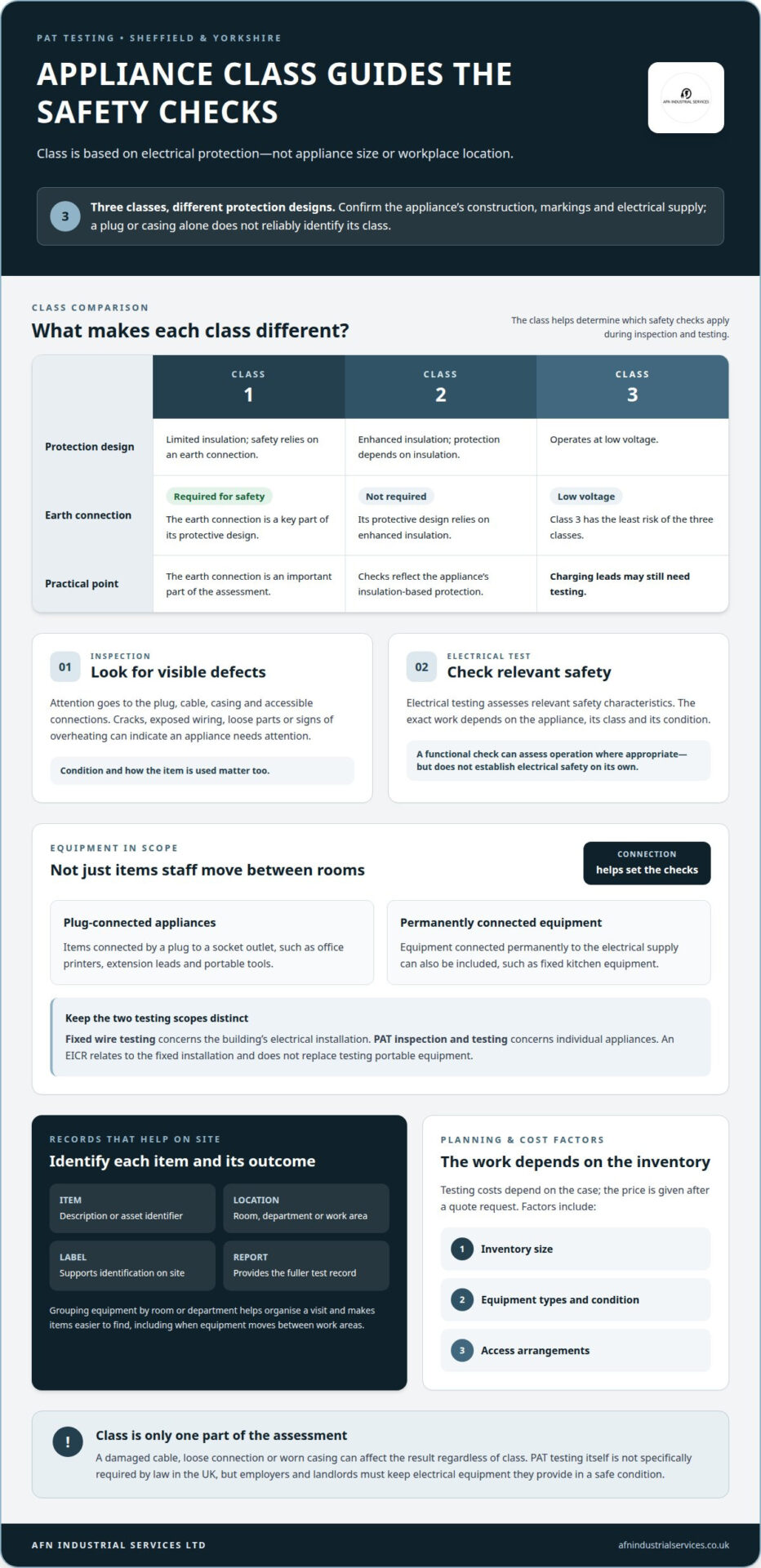
Class is based on an appliance’s electrical protection, not its size or workplace location. The three classes are Class 1, Class 2 and Class 3. Identifying the correct class helps determine which safety checks apply during inspection and testing.
- Class 1: These appliances have limited insulation and rely on an earth connection for safety. The earth connection is a key part of their protective design.
- Class 2: These appliances have enhanced insulation and don’t require an earth connection. Their protective design depends on insulation rather than an earth path.
- Class 3: These appliances operate at low voltage and pose the least risk of the three classes. Their charging leads may still need testing.
When classifying equipment, an engineer considers its construction and electrical supply. A plug or casing alone doesn’t reliably identify the class. The appliance’s markings and design provide useful evidence, while the inspection helps assess its actual condition. For example, a low-voltage appliance may be Class 3, but its charging lead still needs attention.
For workplaces in Sheffield and Rotherham, an inventory helps organise testing across offices, workshops and other site areas. Record each appliance’s identity and location, then group items by type or work area. This makes equipment easier to track and locate during a site visit. Commercial and industrial workplaces in Rotherham may have different equipment and access needs from an office in Sheffield.
A PAT testing service generally combines a formal visual inspection with an electrical test. The inspection looks for visible signs of damage or wear; the electrical test checks relevant safety characteristics. The exact work depends on the appliance, its class and condition. Testing costs depend on factors such as inventory size, equipment types, condition and access arrangements. The price depends on the case and is given after a quote request.
An appliance’s class is one part of its assessment, not a substitute for inspecting it. A damaged cable, loose connection or worn casing can affect the result regardless of class. Each item and its result should be recorded so the business can manage the equipment. This helps workplaces in Sheffield and Rotherham make informed decisions about appliances provided for staff or visitors.
Equipment covered by inspection and testing
Inspection can cover different types of electrical equipment, not just items staff move between rooms. The connection to the electrical supply and the appliance’s use help determine the appropriate checks.
Visual and Functional Inspections
A PAT inspection combines a formal visual inspection with electrical testing. The visual stage looks for defects, while electrical tests assess relevant safety characteristics. Where appropriate, a functional check can establish whether an appliance operates as intended. For example, an engineer can inspect a desk fan’s casing and cable, then assess its operation. These checks provide different information: a functional check alone does not establish electrical safety.
Visual Inspection of Appliances
During a visual inspection, attention goes to the plug, cable, casing and accessible connections. Cracks, exposed wiring, loose parts or signs of overheating can indicate that an appliance needs attention. The inspection also takes account of the item’s condition and use. A workshop power tool may show different wear from an office monitor, so context matters as well as appearance.
Equipment in scope can include appliances permanently connected to the electrical supply and items connected by a plug to a socket outlet. Examples include fixed kitchen equipment, office printers, extension leads and portable tools. The connection and intended use help determine the appropriate inspection and testing. An inventory organised by work area makes it easier to identify equipment across offices, workshops and storage spaces.
Fixed wire testing and PAT testing cover different equipment. Fixed wire testing concerns the building’s electrical installation, while PAT inspection and testing concerns individual appliances. An EICR relates to the fixed installation and does not replace testing portable equipment. Keeping these scopes distinct helps facilities teams plan the right checks. A Barnsley site, for example, may need to track installation and appliance records separately.
Inspection records should clearly identify each item and its outcome. Link the appliance description or asset identifier to its location and test result. This helps facilities staff find the equipment and understand which items need follow-up. Labels support identification on site, while the written report provides the fuller record. Clear documentation is especially useful when equipment moves between departments or work areas.
For sites in Sheffield, Rotherham or Barnsley, a planned inspection can be organised around equipment locations and access requirements. Grouping appliances by room or department reduces the chance of overlooking items during the visit. Practical equipment inspection support can help businesses organise testing and retain clear records for ongoing electrical safety management.
PAT testing for businesses in Sheffield and Yorkshire
For Sheffield and Yorkshire businesses, testing plans should reflect the appliances, their use and the workplace environment. Portable appliance testing in Sheffield can be planned around those site-specific needs. Businesses can organise checks in-house; the UK rules focus on keeping equipment safe, rather than requiring a specific tester qualification.
Tailored Business Testing Schedules
Annual PAT testing is a general recommendation, not a fixed schedule for every workplace. The appropriate frequency depends on the equipment and its environment. A shop with office printers, kettles and staff-used tools may need a different plan from a workshop using electrical equipment in demanding conditions. Consider appliance type, use and condition when setting intervals.
Employers and landlords have a duty of care to ensure appliances they provide to staff or tenants are safe to use. A schedule should identify the equipment in scope, where it is used and when checks are due. Keep it current as the business changes, including when equipment is added or an appliance’s use changes.
Business and Landlord Pricing
The price depends on the case and is given after a quote request. Cost factors include the number and types of appliances, their condition, site access and how the equipment is arranged across the premises. A landlord with appliances in several properties has different scheduling needs from a shop testing equipment at one location.
For a clear testing plan, set out the sites, appliance inventory and access arrangements. Include examples such as computers, kitchen equipment and portable tools. This helps define the scope without assuming that one testing plan suits every business or tenancy.
Choosing Who Carries Out Testing
Businesses can carry out their own checks if they can assess and maintain equipment safely. UK rules do not prescribe a particular qualification or require every employer to hire an external tester. The key consideration is whether the people undertaking the checks have the knowledge and equipment needed for the inspection and tests involved.
For a larger inventory or varied electrical equipment, an external testing service can organise checks and provide consistent records. Consider the equipment types, work environment and how results will be documented. Health and safety planning should also account for appliances used by staff, tenants or visitors.
Preparing Appliances for Testing
Before a scheduled visit, identify the appliances and arrange access to them. Group items by room, department or property, then record their locations and descriptions. In a shop, for example, list equipment in the office, staff area and sales space separately. This makes it easier to locate each item during testing.
Tell staff which equipment is due for inspection and arrange access to appliances that may be stored or shared. Note items that have changed location or use since the last record. Landlords arranging portable appliance testing in Sheffield should coordinate access to supplied appliances within each property. These steps help ensure the agreed equipment is covered and support accurate records.
PAT testing prices and minimum charges
Testing providers may structure quotes around the visit, the number of items or a combination of both. When comparing proposals, check that the scope covers the number and types of appliances, their condition and access to the site. For Sheffield businesses, a clear inventory helps define the work required.
The price depends on the case and is given after a quote request. The main cost factors are the appliance inventory, equipment types, site access and the work required. A concise list of locations and items helps define the scope, whether testing covers one Sheffield shop or equipment across several premises.
Phone chargers and kettles should be identified as separate items in the inventory. A charger may operate at low voltage, but its charging lead may also need testing. A kettle’s plug, cable and casing can be visually inspected before relevant electrical testing. Describing a charger and its lead clearly helps define the work required.
Additional items affect the time and checks required. A small office adding several monitors differs from a workshop adding electrical tools with varied designs and conditions. More appliances can also mean more time to identify equipment, carry out visual inspections and electrical tests, and record results. A complete inventory helps prevent late additions from changing the agreed scope.
When reviewing a quote, separate the visit element from any per-item element. Check that the stated scope accounts for the equipment types, locations and testing tasks required. For example, a site with kettles, chargers and portable tools needs an inventory that represents all three, not just the largest appliances. Clear item descriptions also support accurate records after testing.
Testing providers may structure their quotes differently, so comparisons can be misleading unless the scope matches. One proposal may include a visit element, while another may be based mainly on item numbers or site requirements. Compare what each covers, including visual inspection, electrical testing and documentation, rather than relying on a headline figure alone.
For a practical testing plan, prepare a list of appliances, their locations and any access constraints. Note unusual items, such as chargers shared across departments or equipment stored between shifts. This defines the scope and helps distinguish routine items from equipment needing additional attention. Clear information supports compliance planning and reduces avoidable changes during the visit.
Appliance labels and testing reports
A label gives staff a quick way to identify an appliance’s testing status on site. The report provides the fuller record, linking each tested item to its result and location. Together, they help a Sheffield facilities team distinguish checked equipment from items still awaiting inspection. Neither replaces the need to keep appliances in safe condition.
For labels to be useful, they need to remain attached and readable during normal use. Place them where staff can find them without obstructing controls, ventilation or safety information. A label on a shared kettle, for example, should identify the item without covering its manufacturer’s instructions. If an appliance moves between rooms, update its asset record too.
Reports are most useful when they identify appliances clearly. A description such as “printer” may be hard to match if an office has several. Adding an asset reference or precise location helps staff connect the report entry to the correct machine. Clear records can also distinguish a charger from the appliance it is used with, which matters when both are in scope.
After testing, organise reports by site or department and retain them with the relevant equipment records. A Sheffield business with a shop, office and stockroom can file results so each team can find the right entries. Record follow-up actions against the affected item instead of relying on a general note. This creates a practical trail from inspection result to subsequent equipment management.
Some insurance companies may require up-to-date PAT records to validate insurance. A report helps show which equipment was tested and the recorded outcome. It does not describe an appliance’s condition indefinitely, so staff should continue to report visible damage or faults after inspection. Follow relevant regulations and workplace procedures when deciding how records are retained and used.
For an effective records process, link each label and report entry to the same item identification. Keep an up-to-date appliance list, note changes in location and file reports where facilities staff can retrieve them. If a device is replaced, update the inventory rather than carrying its previous result over to the new item. This simple sequence reduces confusion during later reviews.
Clear labels and reports turn testing results into workable site information. Arrange portable appliance testing and reporting to help keep your equipment records organised and usable.
AFN Industrial Services Ltd: Portable Appliance Testing
AFN Industrial Services Ltd provides Portable Appliance Testing for businesses in Sheffield and across South Yorkshire. The service can help when appliances need inspection, testing and clear records, whether you’re organising checks for an office, workshop or commercial site.
PAT testing can support a practical equipment-safety programme alongside other relevant services, including Health and Safety Support, Fire Extinguisher Maintenance and Emergency Light Drain Tests. Each service addresses a different aspect of workplace safety, helping you plan the checks relevant to your premises.
If your equipment is due for testing or you need to organise its records, contact AFN Industrial Services Ltd to discuss your PAT testing requirements.
Put your next testing plan into action
For businesses planning portable appliance testing in Sheffield, the next step is to turn equipment records into a workable plan for the site. Consider how appliances are used, where they operate and how staff will keep results accessible. A clear plan can help facilities teams make testing part of routine equipment management, rather than a task that sits apart from daily operations.
AFN Industrial Services Ltd provides Portable Appliance Testing alongside Fire Extinguisher Maintenance and Emergency Light Drain Tests. These services address different workplace safety needs and can support your planning for relevant checks at your premises.
Discuss your requirements and the equipment you need tested. Contact AFN Industrial Services to take the next step towards an organised testing plan for your workplace.
Frequently Asked Questions
What is PAT testing?
PAT testing is the inspection and testing of electrical appliances to assess their safety. For example, a workplace might check a staff-room kettle or a portable drill used by maintenance staff. The assessment concerns the individual appliance, not the building’s fixed electrical installation. Results help identify equipment needing attention and provide a record to support safety management.
01 Need a PAT Quote?
To request a PAT quote, contact AFN Industrial Services Ltd with the number of appliances and the site locations. Charges are based on the total number of electrical appliances inspected and tested, so a clear inventory helps define the work. Include examples such as computers, kettles and portable tools, plus any access details that could affect the visit. No fixed rate applies to every site.
How do I get items PAT tested?
Arrange testing by identifying the appliances and the premises where they’re used, then contact AFN Industrial Services Ltd to discuss the scope. For example, a landlord can list supplied appliances by property, while an office manager can organise equipment by department. This makes it easier to plan access and match test records to the right items. Keep the inventory updated when equipment is replaced or relocated.
WHAT IS INVOLVED IN A PAT TEST?
A PAT test involves a visual inspection and electrical tests selected for the appliance. The engineer may inspect a plug, cable and casing, then use test equipment to assess relevant electrical safety characteristics. A functional check may also be appropriate for equipment such as a desk lamp. The checks depend on the appliance’s design and condition, and the results are recorded against the item.
What is a Portable Appliance?
A portable appliance is electrical equipment that can be moved or connected for use, rather than forming part of the building’s fixed electrical installation. Examples include a kettle plugged into a socket, a portable fan or a phone charger. PAT testing can cover electrical appliances operating at 110 V, 230 V and 415 V. Equipment connection and intended use help determine the relevant inspection approach.
What is included in the service?
A PAT testing service includes a formal visual inspection and electrical testing of the agreed appliances. The work can cover equipment such as chargers, office machines, kettles and portable tools. Each item should be identifiable in the resulting records, so its outcome can be matched to the correct appliance. The specific scope depends on the equipment included and the testing required for its design.
What will fail a PAT test?
An appliance may fail if inspection or electrical testing identifies a safety concern. Examples include a damaged cable, exposed wiring, a cracked casing or a defective earth connection where one is required. A fault affecting safe operation can also mean the item needs attention. A failed result applies to the appliance tested, so staff should identify and isolate that item in line with workplace procedures.
What is portable appliance testing (PAT testing) and what does it involve?
Portable appliance testing is the process of inspecting electrical appliances and testing their electrical safety. It typically combines a visual examination with relevant electrical tests, followed by recording the result for each item. A phone charger, for instance, can be assessed separately from the device it charges. This helps a business manage appliance records without confusing them with checks of its fixed electrical installation.
