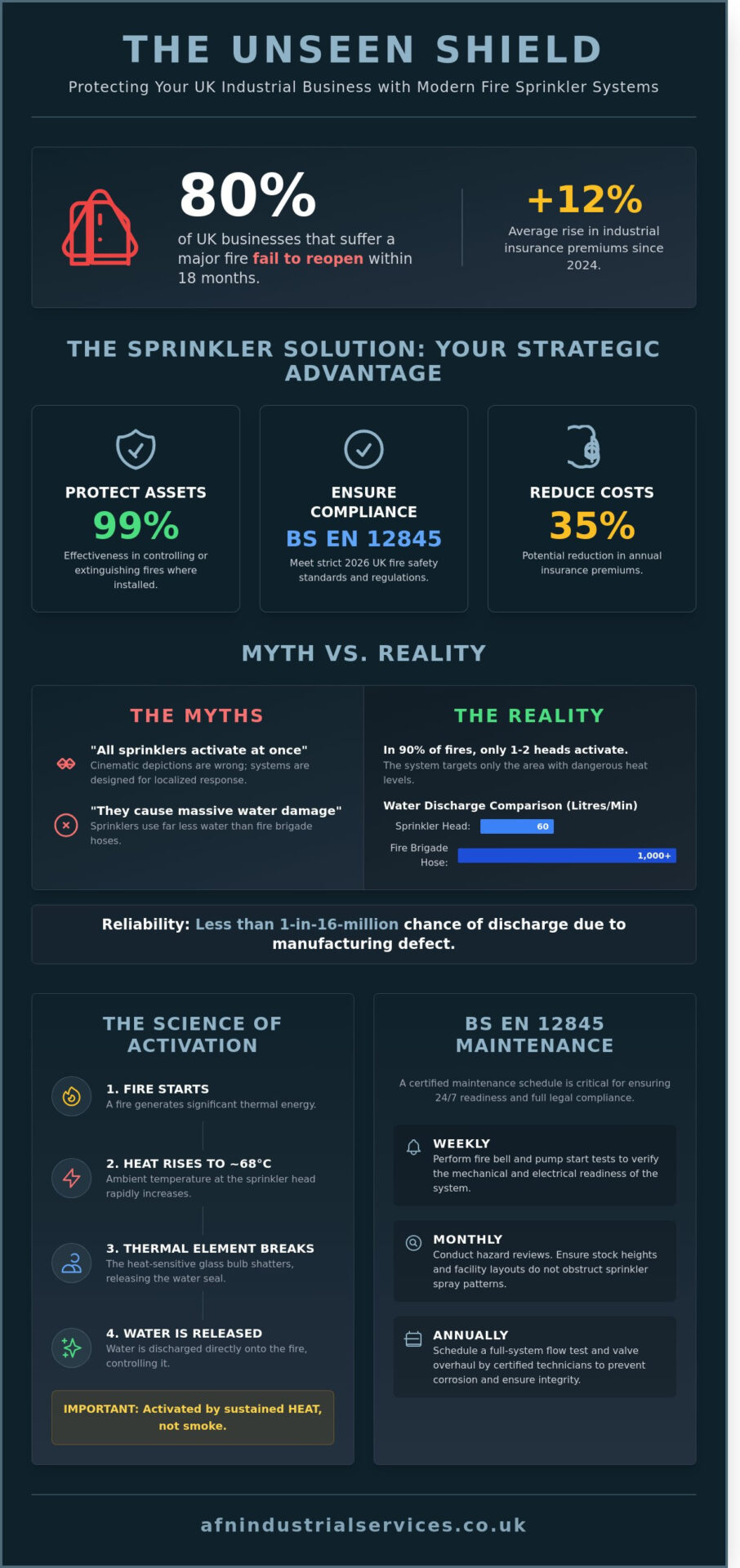
Did you know that 80% of UK businesses that suffer a major fire incident fail to reopen within 18 months? In the industrial corridors of Sheffield and Rotherham, maintaining a robust fire sprinkler system isn’t just about safety; it’s a critical component of your operational continuity for 2026. You likely feel the pressure of shifting UK fire safety regulations and the sting of industrial insurance premiums that have risen by an average of 12% since 2024. It’s understandable to worry about technical complexity or the fear of accidental water damage to your stock.
We’ve designed this guide to provide a clear, professional path through the confusion. You’ll discover how a certified fire sprinkler system protects your South Yorkshire business, ensures full legal compliance, and can lower your insurance costs by as much as 35%. We’ll examine the specific system types available for industrial units, the latest 2026 British Standards, and the bespoke maintenance schedules required to keep your facility secure and efficient.
Key Takeaways
- Learn how a modern fire sprinkler system ensures your South Yorkshire facility meets strict BS EN 12845 standards while providing critical protection for your assets.
- Identify the most effective suppression technology for your specific site, from standard wet systems to bespoke solutions tailored for industrial environments.
- Understand the financial advantages of professional installation, including potential reductions in insurance premiums and enhanced business continuity.
- Navigate the 2026 updates to the Regulatory Reform (Fire Safety) Order to ensure your business maintains full legal compliance and operational safety.
- Discover the strategic value of integrating automatic suppression with comprehensive fire extinguisher servicing to create a robust, total safety strategy.
Understanding the Modern Fire Sprinkler System for UK Businesses
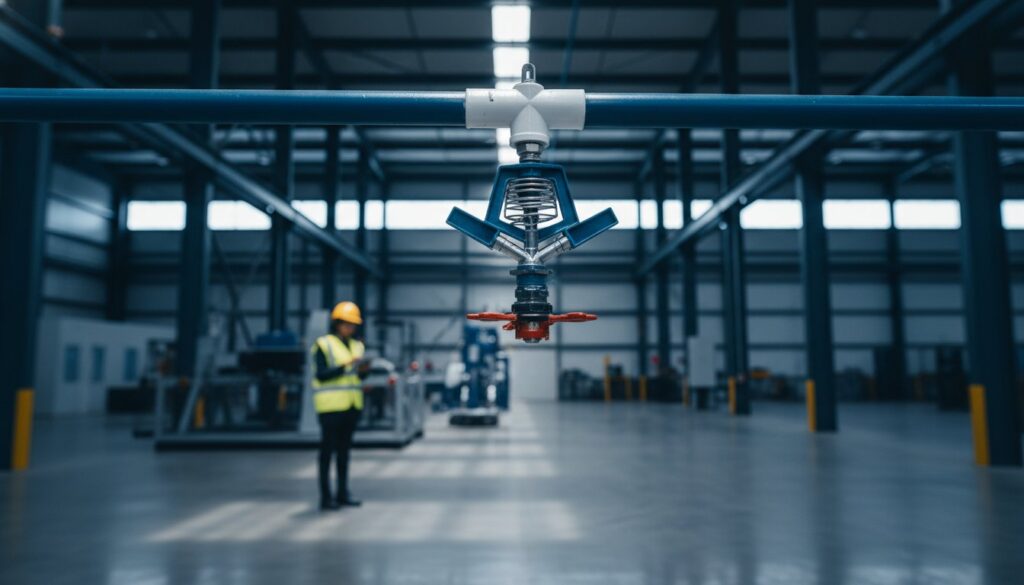
A fire sprinkler system is a dedicated automatic suppression network designed to detect heat and discharge water to control or extinguish a fire. For UK facility managers, it represents the most reliable line of defence against industrial fire spread. By 2026, these systems have evolved to integrate higher-grade materials and smarter monitoring to ensure compliance with updated BS EN 12845 standards. They aren’t just safety features; they’re essential components of business continuity and operational stability.
The architecture of a reliable system consists of three primary elements:
- A dedicated water supply, often involving a bespoke storage tank and pump set to maintain constant pressure.
- A comprehensive piping network distributed across the ceiling or roof structure of the facility.
- Heat-sensitive sprinkler heads placed at calculated intervals to ensure full coverage.
Data from the Business Sprinkler Alliance in 2024 confirms that sprinklers control or extinguish 99% of fires in buildings where they are installed. This efficiency protects the structural integrity of the property and ensures that industrial operations can resume with minimal delay. Modern systems are now more precise than ever, using corrosion-resistant alloys and advanced sensors to guarantee a rapid response when every second counts.
The Science of Activation: How Sprinklers Really Work
Activation relies on thermal physics rather than smoke detection. Each head contains a glass bulb filled with a heat-sensitive liquid or a metal fusible link. When ambient temperatures reach a specific threshold, typically 68°C in a standard warehouse or industrial unit, the liquid expands and shatters the glass. This action releases the water seal. Smoke from a burnt piece of toast or a cigarette won’t trigger this physical reaction. It requires the sustained thermal energy of an actual fire to break the bulb, ensuring the system only deploys when a genuine threat is present.
Debunking Common Sprinkler Myths
Cinema often depicts every head in a building activating simultaneously. This is a complete myth. In 90% of real-world incidents, only one or two heads activate to suppress the fire at its source. This precision limits water damage significantly. A standard sprinkler head discharges roughly 60 litres of water per minute. In contrast, a fire brigade hose can pump out over 1,000 litres in the same timeframe. Modern manufacturing standards, including LPCB (Loss Prevention Certification Board) accreditation, ensure that the risk of a head discharging due to a defect is less than one in sixteen million. It’s a level of reliability that provides peace of mind for high-stakes industrial environments.
Choosing the Right Fire Sprinkler System: Wet, Dry, and Specialist Types
Selecting the correct fire sprinkler system requires a precise understanding of your facility’s thermal profile and fire load. In the UK, commercial installations typically fall into four categories: wet pipe, dry pipe, pre-action, and deluge. Each serves a specific operational purpose to ensure compliance with BS EN 12845 standards. Choosing a bespoke solution ensures that your fire protection strategy aligns with the specific risks of your industry, whether you manage a high-street retail unit or a high-hazard chemical plant.
Wet Pipe Systems: The Standard Choice for South Yorkshire Offices
Wet pipe systems remain the most reliable and cost-effective option for heated buildings. Because the pipes are constantly charged with water, the response time is immediate once a sprinkler head reaches its activation temperature. For retail spaces in Sheffield or office blocks in Rotherham, these systems provide a straightforward solution with lower installation costs compared to specialist alternatives. Reliability is high because there are fewer moving parts that can fail during an emergency.
Maintenance is a critical component of system integrity. Under BS EN 12845, facility managers must ensure specific checks are carried out by certified technicians to maintain safety standards. These include:
- Weekly fire bell and pump start tests to verify mechanical readiness.
- Monthly hazard reviews to ensure stock height doesn’t obstruct spray patterns.
- Annual full-system flow tests and valve overhauls to prevent corrosion.
Regular servicing prevents issues like scale build-up or valve fatigue, ensuring the fire sprinkler system remains ready for 24/7 protection. If you’re unsure about your current compliance status, our specialist team provides comprehensive audits to identify any operational gaps.
Dry Pipe and Pre-Action Systems for Specialist Environments
Unheated environments like Doncaster warehouses or cold storage facilities require dry pipe systems. These pipes hold compressed air or nitrogen rather than water, which prevents the risk of pipes bursting in temperatures below 4°C. When a head activates, the air pressure drops, allowing a dry pipe valve to open and water to flood the system. While there’s a slight delay in water delivery, it’s a necessary trade-off to prevent catastrophic freezing damage in unconditioned spaces.
Pre-action systems offer an extra layer of security for high-value environments across South Yorkshire. These systems are common in data centres or libraries where accidental water discharge could cause £100,000s in damage. They require a dual-activation signal: typically a smoke detector alarm and a sprinkler head activation. This ensures water only enters the pipes when a genuine fire is confirmed. For high-hazard industrial zones, deluge systems provide a different approach. These use open sprinkler heads and a dedicated water supply to saturate an entire area simultaneously, stopping rapid fire spread in its tracks during a chemical or fuel-based emergency.
The Strategic Value of Sprinklers for South Yorkshire Industrial Sites
South Yorkshire remains a primary engine of UK manufacturing. From the heritage steelworks of the Don Valley to the sprawling logistics hubs along the M1 corridor, the regional risk profile is substantial. A robust fire sprinkler system isn’t just a regulatory hurdle; it’s a critical component of business continuity planning. Data from the Business Sprinkler Alliance indicates that fire-related financial losses in commercial buildings without automated suppression are, on average, six times higher than in protected sites. For an industrial operator, this difference determines whether a business recovers or closes permanently.
Protecting Assets in Sheffield and Rotherham’s Industrial Corridors
Industrial sites across Sheffield and Rotherham face unique challenges. High-ceilinged warehouse environments allow heat to accumulate rapidly, often reaching critical flashover points within 240 seconds. A bespoke sprinkler installation provides immediate intervention. This is particularly vital in multi-tenanted commercial buildings where a fire in one unit threatens the entire structure’s integrity. By containing the blaze at its source, you protect not just your own machinery, but the shared infrastructure of the region. This level of protection should be integrated into your wider workplace safety strategy to meet evolving 2026 compliance standards.
Insurance and ROI: Why Sprinklers Make Financial Sense
Insurers treat unprotected industrial assets as high-risk liabilities. Installing a certified fire sprinkler system can lead to annual premium reductions of between 30% and 50%. When you calculate these savings over a decade, the initial installation costs are often fully recovered within 6 years. The financial argument extends beyond premiums:
- Reduced Downtime: Most sprinkler-controlled fires allow operations to resume within 24 hours.
- Asset Preservation: Precision cooling prevents structural steel warping, which occurs at 600°C.
- Market Reputation: Clients require proof of safety resilience before signing long-term logistics contracts.
The peace of mind for facility managers is immeasurable. Managing a 50,000 square foot site requires confidence that your safety systems are proactive. Reliable protection ensures that a minor ignition doesn’t escalate into a catastrophic total loss. It’s a calculated investment in the longevity of South Yorkshire’s industrial landscape. A complete water-based fire protection strategy also requires understanding your obligations around fire hydrant compliance in Sheffield and Rotherham, as a non-compliant private hydrant can invalidate your commercial insurance policy and undermine your entire suppression infrastructure.
Compliance and Maintenance: Meeting BS EN 12845 Standards
Compliance isn’t optional; it’s a fundamental operational requirement for any UK facility manager. The primary framework governing these systems is BS EN 12845, the British Standard for fixed fire-fighting systems. This standard dictates every technical detail from pipe sizing to water supply duration. Following the Regulatory Reform (Fire Safety) Order 2005, and the critical 2026 updates, the legal pressure on businesses to maintain a functional fire sprinkler system has intensified. Your specific obligations start with a robust fire risk assessment. This document identifies the hazard level of your premises and determines if your current system meets the necessary life safety or property protection benchmarks. Without this foundation, your insurance coverage and legal standing remain at risk.
Legal Requirements for Commercial Sprinklers in 2026
Legislation in 2026 mandates that all new commercial buildings over 11 metres in height must feature automatic sprinkler protection. For large-scale warehousing and industrial units, the threshold remains at 20,000 square metres. The “Responsible Person” within your organisation carries the legal weight for these systems. If a fire occurs and the system fails due to poor maintenance, that individual faces personal liability and potential prosecution. South Yorkshire Fire and Rescue audits are rigorous. They require a clear, documented paper trail of inspections and system health checks. Failure to provide these documents during an unannounced audit often results in immediate enforcement notices or heavy fines exceeding £5,000 for initial non-compliance. Using a structured fire safety checklist tailored to Sheffield and Rotherham businesses ensures your documentation is audit-ready and your maintenance intervals are never missed.
The Importance of Routine Testing and Servicing
Reliability depends on consistency. BS EN 12845 outlines a strict testing regime that businesses must follow to ensure total readiness. Weekly tests focus on pump starts, water pressure gauges, and fuel levels. Monthly checks involve inspecting battery electrolyte levels and alarm linkages. Annual servicing is more intensive. It requires full flow tests and internal pipework inspections to check for corrosion. Micro-biologically influenced corrosion (MIC) and pump failures account for 35% of system malfunctions in the UK. Engaging fire safety consultants provides the technical oversight needed to manage these risks effectively. They ensure your maintenance schedule isn’t just a box-ticking exercise but a genuine safety measure that protects your workforce and assets.
Don’t leave your site’s safety to chance. Contact AFN Industrial Services Ltd to schedule a bespoke maintenance review of your fire protection systems today.
Integrating Sprinklers into Your Total Fire Safety Strategy
Installing an automatic fire sprinkler system represents a major investment in property protection, yet it shouldn’t be your only line of defence. Effective fire management requires a layered approach where different systems work in tandem. Sprinklers trigger when heat reaches a specific threshold, but many incidents start as small, localised fires that staff can tackle safely before the main system activates. A 2023 Home Office report noted that 15% of fires in industrial premises were successfully contained by portable equipment before automated systems triggered. Relying solely on one method creates a single point of failure that your business cannot afford.
Complementing Sprinklers with Portable Fire Equipment
Portable extinguishers provide the immediate response necessary to prevent small ignitions from becoming major disasters. While your fire sprinkler system manages the building structure, hand-held units allow for targeted suppression in high-risk zones like kitchens or server rooms. Ensuring these units are operational is a legal requirement under the Regulatory Reform (Fire Safety) Order 2005. AFN Industrial Services provides expert fire extinguisher servicing to guarantee your equipment meets current British Standards. We focus on high-stakes maintenance to ensure your first line of defence is always ready. Our approach includes:
- Annual Maintenance: Rigorous testing of all extinguisher types to ensure they function under pressure.
- Staff Training: Empowering your team to use portable equipment effectively before sprinklers activate.
- Asset Standardisation: Maintaining all safety equipment to the same high professional standard to avoid compliance gaps.
Effective fire safety also requires properly trained personnel who can coordinate emergency responses. Understanding fire marshal duties and regulations for Sheffield and Rotherham businesses ensures your team knows exactly how to respond when automatic systems activate, maintaining order and safety during critical moments.
Expert Safety Consultancy in Rotherham and Sheffield
AFN Industrial Services brings 25 years of operational experience to businesses across South Yorkshire. We don’t just supply equipment; we provide bespoke safety frameworks that ensure total compliance. Our specialists understand the unique risks faced by industrial operators in Rotherham, Sheffield, and Doncaster. We identify gaps in your current protection through detailed site audits. A comprehensive audit often reveals that 20% of safety assets are either outdated or poorly positioned. Our team provides 24/7 support to address these issues immediately. Don’t leave your compliance to chance.
Contact our team today to book a comprehensive site audit. We’ll build a tailored compliance package that integrates your fire sprinkler system with all necessary manual safeguards. Protect your assets and your workforce with a partner who prioritises results and safety above all else.
Securing Your Industrial Assets in South Yorkshire
Protecting your facility requires more than basic compliance. It demands a robust strategy tailored to your specific operational risks. Ensuring your fire sprinkler system meets BS EN 12845 standards isn’t just a legal necessity; it’s a critical investment in business continuity. We’ve seen how the right system prevents catastrophic loss. Whether you operate a cold storage unit in Rotherham or a manufacturing plant in Sheffield, the choice between wet, dry, or specialist systems dictates your long-term safety profile.
AFN Industrial Services brings over 25 years of regional experience to every project. We specialise in Health, Safety, and Environmental compliance, delivering bespoke solutions that integrate seamlessly into your total fire safety plan. Our team provides the technical precision required for high-stakes industrial environments across Sheffield, Rotherham, and Doncaster. A comprehensive fire safety strategy includes not only sprinkler systems but also critical components like fire door inspection to ensure complete compartmentalisation and protection. Don’t leave your site’s integrity to chance when specialist support is available. Contact AFN Industrial Services for a Professional Fire Safety Audit to ensure your business remains protected and compliant for years to come. We look forward to helping you safeguard your operations.
Frequently Asked Questions
Do fire sprinklers go off accidentally very often?
Accidental activation of a fire sprinkler system is extremely rare. Statistical data from the British Automatic Fire Sprinkler Association (BAFSA) indicates the failure rate is approximately 1 in 16 million heads per year. Unlike cinematic portrayals, sprinklers don’t all trigger at once. Only the individual head exposed to temperatures typically exceeding 68°C will discharge water. This precision prevents widespread water damage from accidental triggers.
Is it a legal requirement to have a fire sprinkler system in a UK warehouse?
Legal requirements for warehouse sprinklers depend on the building’s size and height. Under the 2010 Building Regulations (Approved Document B), any new warehouse in England exceeding 20,000 square metres must have a fire sprinkler system installed. For facilities in Scotland, the threshold is lower at 2,000 square metres. Compliance with these standards is mandatory to satisfy insurance providers and local fire authorities.
How much does a commercial fire sprinkler system cost to maintain?
Annual maintenance costs for a standard commercial system typically range from £500 to £1,500 per year. This figure covers the mandatory inspections and testing of pumps, valves, and tank levels. Bespoke industrial systems with complex pump houses or high-hazard classifications may incur higher costs. Regular servicing ensures your facility remains compliant with BS EN 12845 standards while preventing costly emergency repairs.
Will a fire sprinkler system ruin my office equipment if it activates?
While water can damage electronics, a fire sprinkler system actually reduces overall property damage by up to 80% compared to fire brigade intervention. A standard sprinkler head discharges approximately 60 litres of water per minute, whereas a fire service hose delivers over 600 litres per minute. By suppressing the fire early, the system limits heat and smoke damage to a localised area rather than the entire office.
How often should a fire sprinkler system be tested in the UK?
Owners must conduct weekly tests on pump starts and water pressure as per BS EN 12845 guidelines. Professional inspections by a certified specialist are required on a quarterly and annual basis. These scheduled checks verify that all mechanical components function correctly under pressure. We provide comprehensive maintenance logs to ensure your business remains fully compliant with current UK health and safety legislation.
Can I install a fire sprinkler system in an existing building?
Retrofitting a fire sprinkler system into an existing industrial or commercial building is a standard procedure. Engineers use exposed pipework or concealed systems depending on the building’s aesthetic and structural requirements. While costs are approximately 30% higher than new-build installations, retrofitting provides essential life safety and asset protection. It also often leads to a 10% to 15% reduction in commercial insurance premiums.
What happens if my business has a fire but the sprinklers fail?
Failure to maintain a functional system can lead to the voiding of your commercial insurance policy and potential prosecution under the Regulatory Reform (Fire Safety) Order 2005. Statistics show that sprinklers successfully control or extinguish fires in 99% of cases when they’re properly serviced. If a system fails due to negligence, the business owner faces unlimited fines or up to two years in prison for safety breaches.
Who is qualified to inspect fire sprinkler systems in South Yorkshire?
Inspections must be carried out by engineers holding third-party accreditation from bodies like FIRAS or the Loss Prevention Certification Board (LPCB). AFN Industrial Services provides specialist inspection and maintenance across South Yorkshire, including Sheffield, Rotherham, and Doncaster. Our team ensures every component meets BS EN 12845 standards. We offer 24/7 support to keep your industrial operations running safely and without interruption.