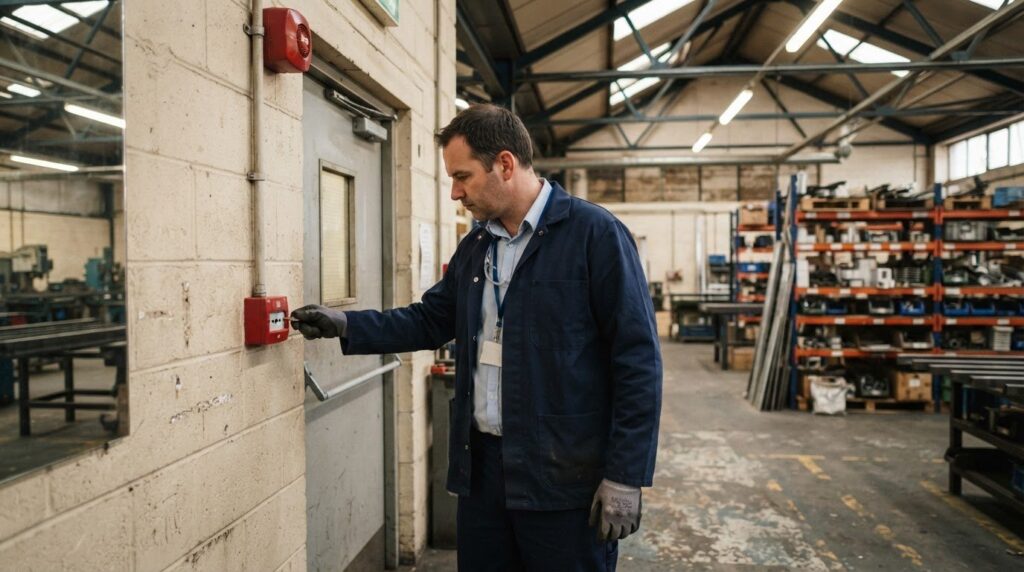
Rotherham businesses should have fire alarm systems maintained by a competent person or company twice per year. The Regulatory Reform (Fire Safety) Order 2005 requires this, according to the UK legislation register. Fire Alarm Servicing and Maintenance in Rotherham also involves planned checks and testing to help keep the system operational and support compliance.
It’s understandable to want clear guidance on when to arrange maintenance and what it should cover. This guide explains how regular servicing fits alongside weekly tests, what planned inspections and functional checks involve, and how to organise maintenance records. You’ll also learn what can affect the maintenance schedule for commercial premises and how to manage fire safety responsibilities systematically.
Key Takeaways
- Plan competent fire alarm maintenance twice per year, as required by the Regulatory Reform (Fire Safety) Order 2005, according to the UK legislation register.
- Build weekly alarm tests into your routine and record each test in the system log book.
- Understand how conventional, addressable and wireless systems differ so maintenance can account for your building’s alarm setup.
- Wireless fire alarm systems comply with BS5839-1:2017 and BS EN54, according to the British Standards Institution.
- Use planned inspections to test relevant equipment and devices, identify defects and record the findings.
Do I need to have my Fire Alarm serviced?
Yes. Fire alarm systems in UK workplaces need maintenance by a competent person or company twice per year, according to the UK legislation register. Fire alarm servicing and maintenance in Rotherham should form part of a planned approach to keeping the system operational. Regular servicing can identify faults that routine user tests may not reveal, such as a device that fails to communicate with the control panel.
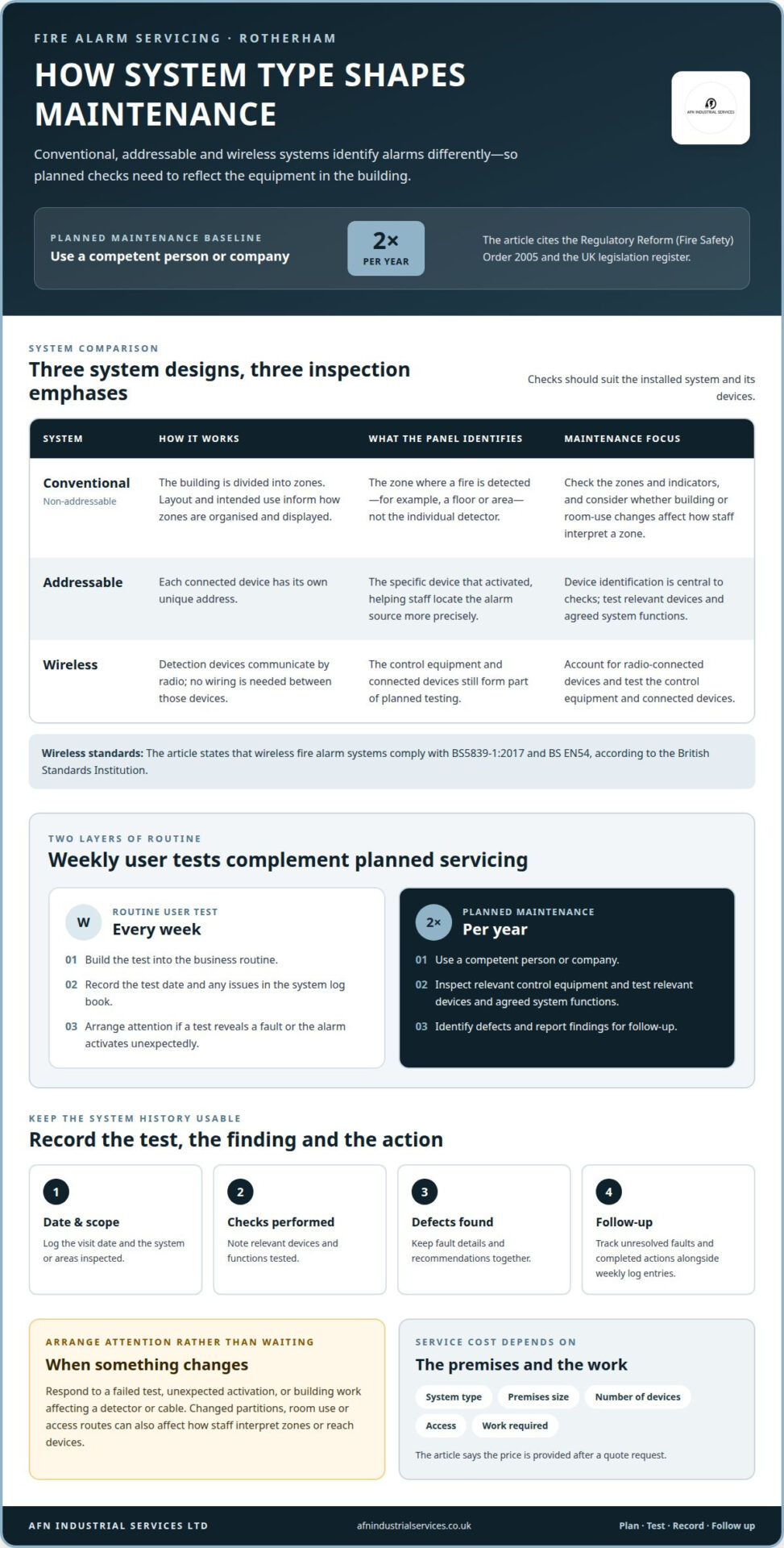
Weekly testing is also part of a business’s routine. Record each test in the system log book, including the date and any issues. If a test reveals a fault, the alarm activates unexpectedly, or building work affects a detector or cable, arrange appropriate attention rather than waiting for the next planned visit.
How much does fire alarm servicing cost in Rotherham? The cost of fire alarm servicing and maintenance in Rotherham depends on the system type, premises size, number of devices, access and work required. The price is provided after a quote request.
The system design affects how faults and activations appear. A conventional fire alarm divides a building into zones, and its control panel indicates which zone has detected a fire. For example, the panel might identify a particular floor or area, but not the individual detector.
Conventional systems are also known as non-addressable systems. Their zone-based design can suit premises where identifying the affected area is sufficient. During installation, the building’s layout and intended use inform the design, including how zones are organised and displayed.
An addressable system gives each connected device its own unique address. When a detector activates, the control panel can identify that device. This helps staff locate the source of an alarm more precisely, which is useful in buildings with multiple rooms, floors or operational areas.
Wireless fire alarm systems use radio communication between detection devices, so no wiring is needed between those devices. This can make their installation different from wired conventional or addressable systems. The control equipment and connected devices still need testing as part of planned maintenance.
These differences matter during servicing. A competent person can inspect relevant control equipment, test relevant devices and agreed system functions, identify defects and report findings. For a conventional system, checks include its zones and indicators; for an addressable system, device identification is central; wireless checks account for radio-connected devices.
Consider the building’s current layout and any system changes when planning maintenance. A moved partition, altered room use or changed access route can affect how staff interpret a zone or reach a device. Clear records of tests, faults and maintenance help responsible staff track the system’s condition and follow up on defects.
Fire safety regulations and business compliance
Fire safety compliance depends on clear responsibilities, planned maintenance and usable records. For Rotherham businesses, the system’s condition and documentation should support day-to-day fire precautions.
Compliance Responsibilities
Businesses and responsible persons should ensure fire precautions and protection systems are properly managed and maintained. Assign responsibility for arranging maintenance, keep records accessible and respond to faults rather than treating a failed test as routine. If an alarm stops working, report the problem promptly and arrange repair through the business’s maintenance process.
For emergency repairs, give the person arranging the work the panel’s fault or alarm indication, the affected area and any access constraints. This helps focus the repair on the reported issue and the system’s operational needs.
Service Reports and Records
A service report should clearly explain the visit’s outcome to those responsible for fire safety. Keep the date, system or areas inspected, relevant devices and functions tested, defects found, and recommended actions together in the premises’ records. This provides a practical history for tracking unresolved faults and planning follow-up work.
Weekly user tests also need an entry in the log book. Record each test and any issue it reveals, then keep maintenance reports alongside those entries. A clear sequence of test results, reported faults and completed actions is more useful than scattered paperwork.
Fire Alarm Compliance Standards
The Regulatory Reform (Fire Safety) Order 2005 requires fire alarm systems in the United Kingdom to be maintained by a competent person or company twice per year, according to the UK legislation register. Wireless fire alarm systems comply with BS5839-1:2017 and BS EN54, according to the British Standards Institution. Apply the relevant system standard when reviewing maintenance arrangements.
Failure to maintain an alarm can impair detection or notification and weaken the records showing how fire precautions were managed. The practical risk is that a fault goes unnoticed when the system is needed. The responsible person should act on defects and keep evidence of follow-up.
Contractor Qualifications and Certifications
For a Rotherham contractor, the requirement stated in the Regulatory Reform (Fire Safety) Order 2005 is competence. Look for evidence that the person or company understands the system being maintained and can inspect its equipment, test relevant functions, identify defects and report findings clearly.
Ask for a service report that links the work performed to the results and any actions required. These details help you assess the work without relying on a certificate name alone.
Commercial fire safety requires dedicated measures tailored to business premises, differing significantly from residential safety guidelines. Ensuring your commercial facilities meet all current legal obligations protects both staff and property effectively.
For wider workplace compliance support, explore Health and Safety Services from AFN Industrial Services Ltd as part of a structured approach to managing site responsibilities.
Fire safety responsibilities and official guidance
For a business premises, fire safety planning should connect everyday procedures with working detection and protection systems. The responsible person can use records, staff feedback and changes to the site to identify where arrangements need attention.
A practical assessment considers how the premises are used, how people move through them and whether changes affect existing precautions. For example, a new partition may alter sightlines to an alarm call point, while a changed work area may affect how staff understand an alert. Record the issue, the action taken and who is responsible for follow-up.
Fire safety checks can also help measure performance. Track whether planned checks take place, faults are recorded and corrective actions are completed. A repeated fault or overdue action signals that the process needs attention. Reviewing these records alongside staff reports helps managers spot patterns, such as recurring problems in one area.
Tailor the review to the premises instead of relying on a generic checklist. A warehouse, office and public-facing site have different layouts and work patterns. Consider whether staff can recognise an alarm, understand the response procedure and report an obstruction or fault. If a change affects detection or access, document its impact and the decision made.
South Yorkshire Fire and Rescue Service provides a separate online home safety check. Anyone can complete it, making it an accessible step for residents reviewing fire risks at home. It is a household tool, not a substitute for managing fire safety at commercial premises.
After completing the online check, South Yorkshire residents deemed to be at increased risk of fire can submit their contact details. South Yorkshire Fire and Rescue Service then contacts eligible residents to arrange an in-person home fire safety visit. The visit provides advice on making a home safer and what to do if a fire occurs.
Eligibility for an in-person visit relates to increased fire risk, not simply living in South Yorkshire. Factors associated with increased risk may include a person’s physical or mental health, their home environment, or daily activities such as smoking. The online check helps identify whether a resident may be eligible and provides a way to share contact details for follow-up.
Keep the distinction clear in local planning: commercial premises need site-specific fire precautions, while South Yorkshire’s home check and visits support residents at home. For a business, a useful review records the premises considered, issues identified, decisions made and actions assigned. This provides a practical basis for follow-up when operations or the building change.
Planned fire alarm maintenance and system testing
Planned maintenance checks whether a fire alarm system and its agreed functions operate as intended. For a Rotherham business, the programme should reflect the building’s layout, system design and operational use, rather than treating every property as identical.
For practical testing, businesses should test the fire alarm weekly and record the details in a log book. The Regulatory Reform (Fire Safety) Order 2005 requires maintenance by a competent person or company twice per year, according to the UK legislation register. These steps give staff a routine for identifying issues and arranging follow-up.
Fire alarm installation planning starts with the premises. The system design needs to account for the layout and how people use each area. A clear specification helps define which control equipment, devices and agreed functions need attention during later maintenance. Building alterations or changes in use should prompt a review of whether the existing arrangement remains suitable.
System choice can vary with building size. The choice between conventional and addressable systems depends on the building’s needs. A conventional panel indicates the zone where an alarm was detected; an addressable panel can identify the specific connected device. These differences affect how staff interpret an activation and how maintenance findings describe it.
During a planned visit, servicing includes inspecting relevant fire alarm control equipment and testing relevant devices and agreed system functions. The engineer identifies defects and reports findings. If an installation has interfaces with other agreed functions, the service scope should specify which functions are tested and what results the report records.
- Inspect: Review the relevant control equipment and system condition.
- Test: Test relevant devices and functions included in the agreed scope.
- Record: Document defects and findings for operational follow-up.
BS 5839-1 is relevant to fire alarm systems, but the practical routine is clear: test weekly and record each test, then arrange competent maintenance twice per year. This answers what businesses should plan without confusing regular user testing with planned servicing.
Service documentation supports ongoing system management. Keep the report with the log book so staff can track what was tested, which defects need repair and what action followed. For example, if a device fails during a test, the record should help the responsible person follow the defect through to resolution.
Maintenance is ongoing, not a task completed once at installation. Changes to rooms, access or use can affect how alarms are understood and how technicians approach checks. Reviewing the specification, agreed functions and service records together helps businesses maintain a consistent picture of system condition and required repairs.
The routine described is to test the alarm weekly and record each test in a log book, with maintenance by a competent person or company twice a year. Regular user testing and planned servicing are separate activities.
Planned commercial fire alarm inspection and maintenance
Commercial premises need a planned fire alarm maintenance schedule, not just a response when faults appear. The Regulatory Reform (Fire Safety) Order 2005 requires maintenance by a competent person or company twice per year, according to the UK legislation register. For commercial systems, quarterly maintenance is advised, while six-monthly maintenance is also described as acceptable.
These intervals serve different planning approaches, so make the selected schedule clear in the premises’ maintenance plan. Set out the planned visit dates, the system and areas covered, and who receives the findings. A clear schedule helps responsible staff track inspections alongside weekly user tests and identify missed or overdue actions.
A planned commercial inspection should assess the system as installed and the building as currently used. Servicing includes inspecting relevant control equipment, testing relevant devices and agreed system functions, identifying defects, and reporting findings. For example, a device fault should be recorded with enough detail to locate the affected area and plan corrective work.
Define the service scope before each visit. It should identify the control equipment, devices and agreed functions included, and how the engineer will report faults. If the site has changed since the previous inspection, such as a room being repurposed, note the change so the inspection reflects current use and fire protection arrangements.
Planned maintenance also needs to fit commercial operations. Coordinate access to relevant rooms and equipment, and tell staff when testing may affect normal activity. For a site with several work areas, a planned sequence can help ensure each agreed part of the system receives attention while limiting disruption.
When an inspection identifies a defect, the report should distinguish the finding from the action needed. Assign responsibility for arranging repairs and record progress until the issue is addressed. If an emergency or unexpected activation occurs between planned visits, follow the site’s response procedures and record the incident for review.
Useful maintenance records bring together the schedule, inspection reports, weekly test entries and follow-up actions. Reviewing them helps responsible staff see whether visits occurred as planned, which faults remain open and whether a recurring issue needs further attention. A named person should own the review and ensure actions are not lost between operational teams.
The key takeaway is to choose and document a planned interval, then keep inspections and follow-up visible. To strengthen related workplace safety arrangements, explore Health and Safety Services as part of your site’s wider compliance planning.
AFN Industrial Services Ltd: Fire Extinguisher Maintenance
AFN Industrial Services Ltd supports workplace fire safety through fire extinguisher maintenance, helping businesses manage this separate part of their fire protection arrangements. Fire alarm servicing is a distinct task, while maintained extinguishers provide another element of site preparedness.
Businesses can also arrange Portable Appliance Testing, Emergency Light Drain Tests and Health and Safety Services. These services can support wider safety planning alongside a structured fire alarm maintenance schedule, without combining separate checks into one process.
Consider fire extinguisher maintenance when planning routine site safety work or reviewing how equipment is managed across your premises. For a broader view of workplace requirements, Health and Safety Services can also support practical compliance planning.
Contact AFN Industrial Services Ltd to discuss your workplace fire safety needs.
Make your next fire safety action count
Turn maintenance records into a practical plan for the months ahead. Assign responsibility for outstanding actions, keep system documentation accessible to relevant staff, and update arrangements when building use or operations change. This keeps safety tasks visible instead of leaving them to be rediscovered during the next inspection.
For firms organising fire alarm servicing and maintenance in Rotherham, it also helps to consider related workplace safety needs as separate tasks. AFN Industrial Services Ltd offers Fire Extinguisher Maintenance, Portable Appliance Testing and Emergency Light Drain Tests, which can support wider site safety planning.
Contact AFN Industrial Services Ltd to discuss these workplace safety requirements and your next steps. A clear plan gives your team a practical starting point and helps keep essential responsibilities moving forward.
Frequently Asked Questions
What standards do I need to comply with?
UK businesses must maintain fire alarm systems under the Regulatory Reform (Fire Safety) Order 2005, with maintenance by a competent person or company twice per year, according to the UK legislation register. For wireless fire alarm systems, the British Standards Institution states compliance with BS5839-1:2017 and BS EN54. Keep the system’s design and maintenance documentation together, so staff can identify which standards and arrangements apply to their installed equipment.
What does fire alarm servicing and maintenance include in Rotherham?
Servicing typically involves inspecting relevant control equipment, testing relevant devices and agreed system functions, identifying defects, and reporting findings. The work should reflect the installed system and its agreed scope. For example, a report might identify a device that failed testing and specify its location, helping the responsible person arrange follow-up. Keep this documentation with the premises’ maintenance records to support continuity between visits.
Which fire alarm maintenance companies serve Rotherham and South Yorkshire?
AFN Industrial Services Ltd supports businesses in Rotherham and South Yorkshire with related workplace safety services, including Fire Extinguisher Maintenance, Portable Appliance Testing and Emergency Light Drain Tests. These services address separate safety needs and don’t replace fire alarm maintenance. For your alarm system, keep its maintenance arrangements and records distinct from other site inspections, so responsibility for each task remains clear.
What should a fire alarm service report and maintenance log include?
A useful record identifies the visit or test date, the system or area covered, devices or functions checked, results, defects and follow-up actions. Include enough location detail to find a problem, such as a device reference or zone. Record who owns each outstanding action and when it is completed. This creates a traceable history for staff reviewing system maintenance and open issues.
What are the risks and penalties of failing to maintain a fire alarm system?
Failure to maintain a fire alarm can impair detection or notification, leaving a fault unnoticed when the system is needed, and weaken records of fire safety management.